
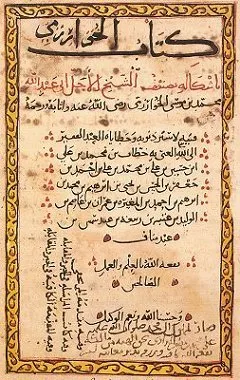
Arabic mathematics during the Islamic Golden Age fundamentally reshaped the trajectory of global science, bridging ancient traditions to create revolutionary new disciplines. Scholars working in vibrant intellectual hubs like Baghdad synthesized Greek and Indian mathematical concepts, sparking an era of profound scientific discovery that would eventually echo across Europe and the rest of the Western world.
At the heart of this mathematical transformation was Muhammad ibn Musa al-Khwārizmī, whose 9th-century work established algebra as an autonomous field of study. Breaking away from earlier arithmetical traditions, al-Khwārizmī introduced systematic methods for solving linear and quadratic equations, offering a unifying theory that allowed numbers and geometrical magnitudes to be treated as dynamic algebraic objects.
Related Stories

Get the Latest Sports News from Seymour's Bird
Receive the latest updates on football, basketball,and technology news directly in your inbox. It's free!
SubscribeThe practical applications and broad utility of these mathematical innovations did not remain confined to the Islamic world. Through trade routes, cultural exchanges, and translations during the medieval era, Arabic mathematical treatises found their way into medieval Europe, deeply influencing the intellectual landscape of the Renaissance and inspiring generations of Western mathematicians.
Today, historians recognize that the sophisticated frameworks developed by medieval Islamic scholars provided the essential vehicle for the future evolution of mathematics. By moving beyond traditional geometric concepts and introducing systematic abstraction, these pioneering minds laid the indispensable cornerstone for modern mathematics as we know it today.
Legacy of Al-Khwarizmi and Islamic Scholars
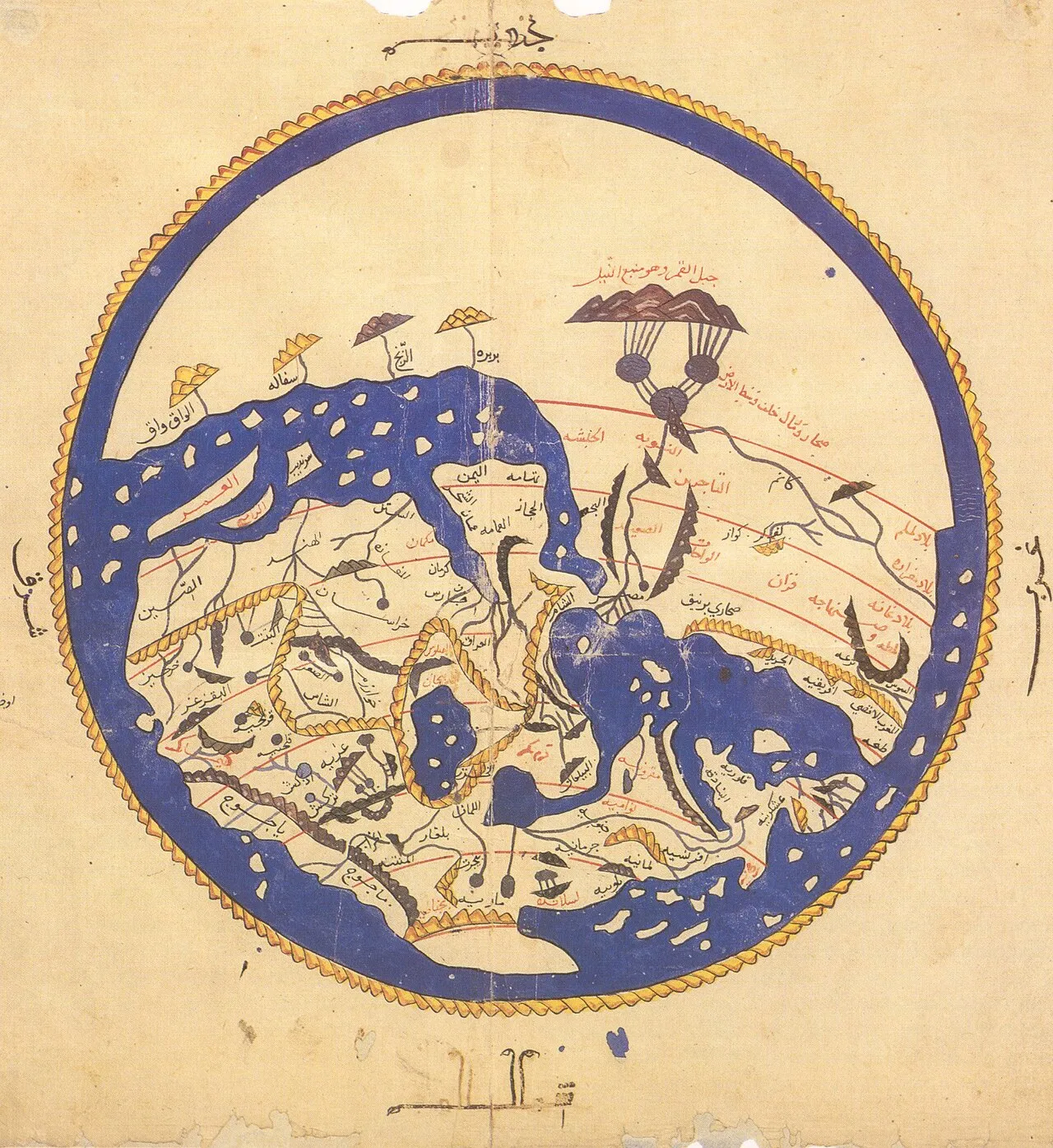
The intellectual momentum initiated by al-Khwarizmi was vigorously expanded by a succession of brilliant mathematicians who pushed the boundaries of algebra and geometry. Scholars such as al-Karaji, Omar Khayyam, and Sharaf al-Din al-Tusi introduced advanced concepts, including the systematic solution of cubic equations and early forms of mathematical induction.
Omar Khayyam notably advanced the field by finding general geometric solutions to third-order equations through the intersection of conic sections, expanding far beyond previous limitations. Meanwhile, figures like al-Tusi explored complex polynomial curves to determine maximum values, showcasing an advanced level of mathematical inquiry that was centuries ahead of its time.
"The contributions of these medieval scholars gave mathematics a completely new development path, providing a robust framework for future scientific breakthroughs," noted contemporary historical evaluations of the period's profound impact.
Ultimately, the profound legacy of Arabic mathematics endures in the very terminology and structural foundations of modern scientific disciplines. The seamless transmission of this ancient wisdom into Western academic traditions remains one of the most significant chapters in the history of human knowledge.