
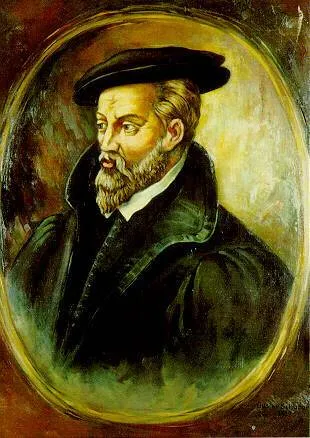
Georgius Agricola, born Georg Bauer on March 24, 1494, in Glauchau, Germany, emerged as one of the most prominent Renaissance humanist scholars, mineralogists, and metallurgists of his era. Educated broadly across various disciplines, he developed a profound fascination with the mining and refining of metals while living in the mineral-rich regions of the Holy Roman Empire.
His monumental twelve-chapter treatise, "De re metallica libri XII", published posthumously in 1556, served as the definitive, unrivaled standard reference work on mining and metallurgy for over two centuries. By relying strictly on direct observation and empirical investigation, Agricola systematically classified extraction techniques, surveying methods, and mineral properties.
Related Stories

Get the Latest Sports News from Seymour's Bird
Receive the latest updates on football, basketball,and technology news directly in your inbox. It's free!
SubscribeBeyond his contributions to mining sciences, Agricola published over forty scholarly works spanning medicine, pedagogy, metrology, and philosophy. His 1546 publication "De Natura Fossilium" earned him widespread recognition as the father of mineralogy and the true founder of geology as a rigorous scientific discipline.
Serving civic roles including the burgomaster of Chemnitz and town physician in Joachimsthal, Agricola seamlessly blended public service with relentless scientific inquiry. He passed away on November 21, 1555, leaving behind a legacy celebrated by his contemporaries as "the distinguished ornament of the Fatherland".
Scientific Legacy and Publications
Agricola's revolutionary approach to science emphasized empirical evidence over unverified ancient theories, fundamentally transforming how scholars understood subterranean phenomena. In his 1544 work "De ortu et causis subterraneorum", he challenged older paradigms and established core principles of modern physical geology.
He investigated the powerful geological forces of wind and water, the distribution of groundwater, and the origins of subterranean heat and mineralizing fluids. Furthermore, his rigorous studies on weights and measures helped pave the way for standardized commercial systems across the fractured states of the 16th-century Holy Roman Empire.
The meticulous woodcuts and detailed descriptions within his publications provided future generations with unmatched technical insights into historical industrial practices, water mill applications, and ore prospecting. His transition from the alchemical traditions of the past to systematic chemical and mineralogical categorization marked a turning point in scientific history.
Today, Georgius Agricola remains celebrated globally as a visionary intellect whose dedication to observation and documentation bridged the gap between Renaissance humanism and modern scientific inquiry.