
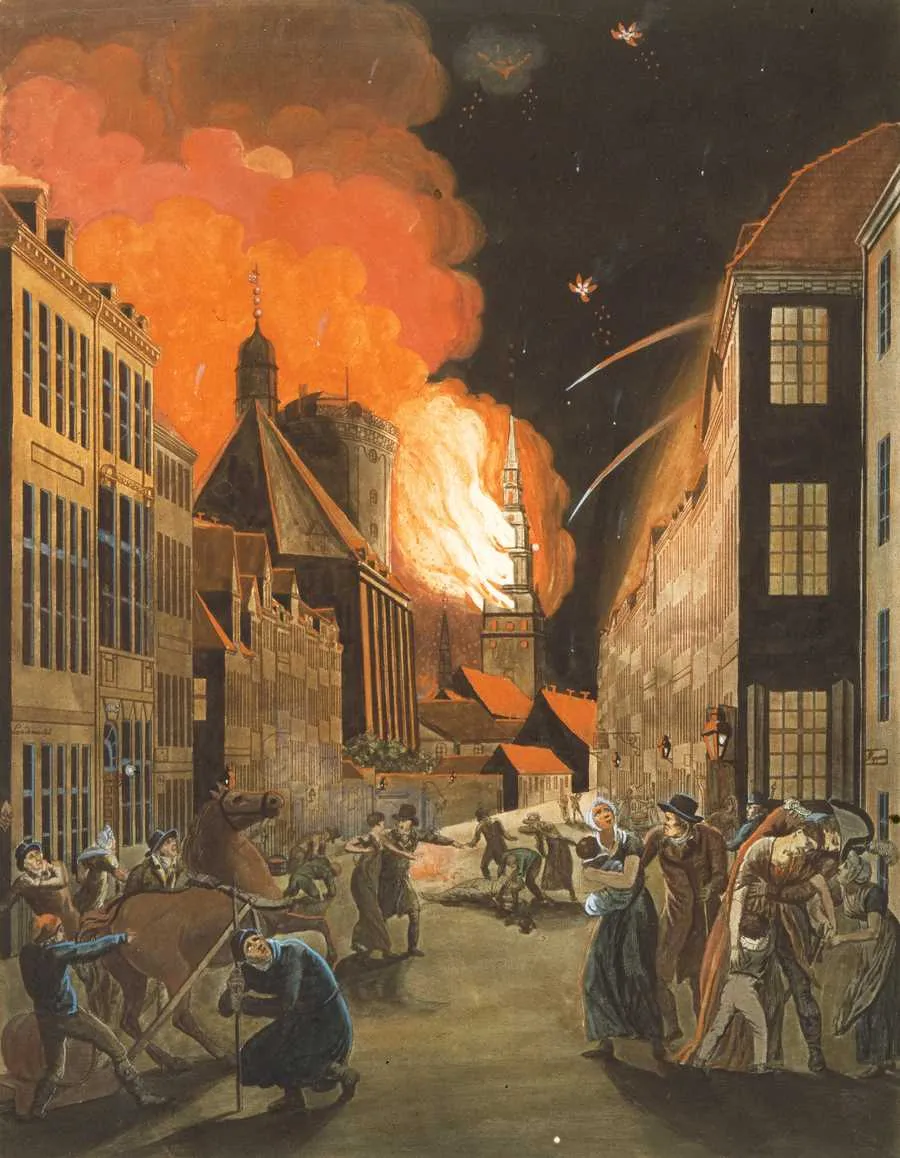
The Battle of Copenhagen, also historically known as the Bombardment of Copenhagen, stands as one of the most controversial pre-emptive military operations of the Napoleonic Wars. Occurring between 16 August and 7 September 1807, the British expedition aimed directly at preventing the powerful Dano-Norwegian fleet from falling into the hands of Napoleon Bonaparte.
"The intelligence from so many and such various sources that Napoleon's intent was to force Denmark into war against Britain could not be doubted," wrote Chancellor of the Exchequer Spencer Perceval, capturing the intense strategic anxiety that gripped the British cabinet during the summer of 1807.
Related Stories

Get the Latest Sports News from Seymour's Bird
Receive the latest updates on football, basketball,and technology news directly in your inbox. It's free!
SubscribeFearing that French forces would march into Zealand and close vital Baltic trade routes, British leadership authorized a massive naval and land campaign. A force of 25,000 troops under General Lord Cathcart, supported by Admiral James Gambier's fleet, converged on the Danish coast, landing at Vedbæk and quickly establishing a strict blockade around the capital.
Despite declaring strict neutrality, Denmark found itself trapped between rival European superpowers. Following swift engagements such as the Battle of Køge on 29 August, British forces completely isolated the Danish capital and began a relentless artillery bombardment on 2 September using heavy siege guns and Congreve rockets.
The Diplomatic Fallout and Legacy of the 1807 Siege

The devastating attack resulted in over a thousand burning buildings and tragic civilian casualties, forcing Danish commander Ernst Peymann to sue for peace by 5 September. The resulting capitulation permitted British forces to seize the bulk of the Danish navy and sail the captured vessels back to England.
The fallout from the bombardment profoundly reshaped European geopolitics, pushing Denmark into a direct alliance with France and sparking the Anglo-Danish Gunboat War. Furthermore, the aggressive operation gave rise to the enduring diplomatic and military term to "Copenhagenize", describing the pre-emptive seizure of an adversary's fleet.
The unilateral action by Great Britain ignited fierce political debate both in Parliament and across Europe regarding the ethics of pre-emptive warfare. While government officials defended the measure as an act of absolute self-preservation to safeguard maritime trade, political opponents argued it stained the national character and needlessly created a new enemy.
"Nothing ever was more brilliant, more salutary or more effectual than the success at Copenhagen," Foreign Secretary George Canning famously declared to supporters, defending the government's swift and ruthless execution of the campaign against intense domestic criticism.