
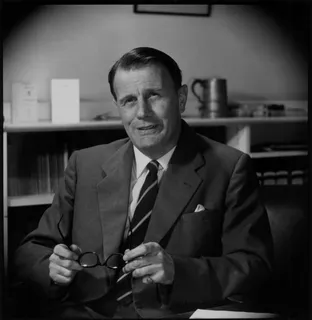
Peter Hunter Blair established himself as one of the preeminent British historians of the 20th century, dedicating his academic career to unraveling the complexities of Anglo-Saxon England. Born on March 22, 1912, he developed a deep intellectual foundation early in life, educated at Durham School before proceeding to Emmanuel College, Cambridge.
Throughout his distinguished career, Hunter Blair served as a fellow of Emmanuel College and a Reader in the Department of Anglo-Saxon, Norse and Celtic at the University of Cambridge. His rigorous scholarship earned him widespread peer recognition, culminating in his election as a fellow of the Royal Historical Society in 1970 and a Fellowship of the British Academy in 1980.
Related Stories

Get the Latest Sports News from Seymour's Bird
Receive the latest updates on football, basketball,and technology news directly in your inbox. It's free!
SubscribeBeyond his administrative and teaching roles at Cambridge, Hunter Blair produced a series of seminal publications that remain foundational texts for scholars of early medieval Britain. His notable works include An Introduction to Anglo-Saxon England, Roman Britain and Early England, and The World of Bede, which offered unprecedented insight into the ecclesiastical and political structures of the period.
Hunter Blair's personal life was closely intertwined with the literary world. In 1969, he married his third wife, the acclaimed children's author Pauline Clarke, who later played a vital role in editing his scholarly volume Anglo-Saxon Northumbria following his passing on September 9, 1982.
Legacy and Academic Impact of Peter Hunter Blair
The academic community continues to celebrate Peter Hunter Blair for transforming how historians approach the documentary and material records of early Britain. His careful interrogation of Bede's works and regional political histories bridged the gap between specialized academia and broader historical appreciation.
Scholars frequently return to his 1956 publication An Introduction to Anglo-Saxon England, praising its clarity and enduring relevance despite decades of subsequent archaeological discoveries. Subsequent editions featuring introductions by modern historians like Simon Keynes underscore the text's lasting utility in university curricula.
Colleagues and biographers, including Peter Clemoes in his memoirs for the British Academy, highlighted Hunter Blair's meticulous methodology and dedication to institutional excellence at Cambridge. His leadership within the Department of Anglo-Saxon, Norse and Celtic helped cement the department's international reputation.
Though he passed away in September 1982 at the age of 70, Peter Hunter Blair's intellectual footprint remains deeply embedded in medieval studies. Through his published monographs and the generations of students he mentored, his legacy as a titan of Anglo-Saxon historiography endures.