
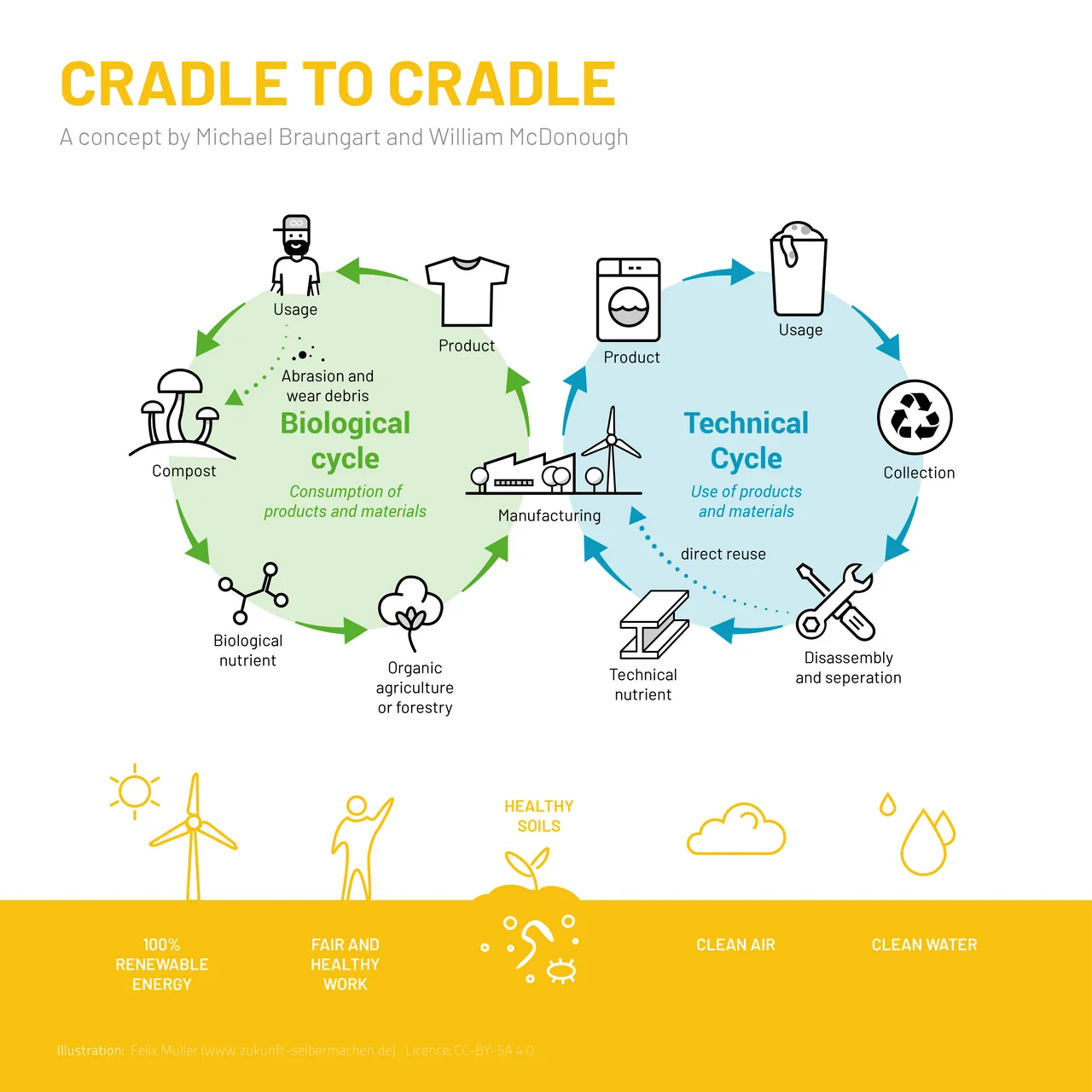
Cradle to cradle design continues to redefine modern industrial and economic systems by introducing a biomimetic approach that models human manufacturing directly on natural processes. Often referred to as C2C or regenerative design, this innovative framework treats materials not as disposable waste, but as valuable nutrients circulating within healthy, safe biological and technical metabolisms.
Popularized by Michael Braungart and William McDonough through their landmark 2002 book, the model serves as a direct challenge to the traditional "cradle to grave" manufacturing mindset. By ensuring that products are created with circularity in mind from their inception, industries can effectively eliminate the concept of waste and drastically reduce environmental footprints.
Related Stories

Get the Latest Sports News from Seymour's Bird
Receive the latest updates on football, basketball,and technology news directly in your inbox. It's free!
SubscribeThe framework categorizes all industrial materials into two distinct cycles: biological nutrients that can safely return to nature, and technical nutrients designed to be continuously reused without losing their intrinsic quality. This dual-metabolism approach protects natural ecosystems while maintaining high-performance industrial productivity.
Organizations and governments worldwide have increasingly integrated C2C principles into architecture, urban planning, and consumer goods manufacturing. From eco-friendly corporate headquarters to comprehensive product certification programs, the movement demonstrates that commercial success and rigorous environmental stewardship can go hand in hand.
Implementation and Challenges in Modern Manufacturing
Implementing cradle to cradle design requires a fundamental overhaul of supply chains, chemical usage, and product assembly methods. Companies must carefully evaluate every input, replacing harmful synthetic materials and heavy metals with safe alternatives that support long-term ecological and human health.
Practical applications are already visible in major corporate transformations, such as automotive manufacturing facilities incorporating vegetative roofs to manage stormwater runoff, save energy, and significantly cut down on costly mechanical treatment infrastructure.
Despite its profound potential, the widespread adoption of C2C faces notable logistical hurdles, particularly regarding the disassembly of complex products at standard civic amenity sites. Because modern consumer goods are rarely built for easy manual separation, recovering high-value rare-earth elements and specialized alloys remains a complex economic challenge.
Experts emphasize that achieving a truly circular economy will require stronger producer responsibility policies, mandatory product take-back schemes, and closer collaboration between manufacturers, independent certification institutes, and policymakers to establish universal sustainability standards.