
Formula One team orders remain one of the most polarizing aspects of motorsport, directly challenging the fundamental concept of racing where drivers compete purely for themselves. Teams often instruct drivers to deviate from normal racing practices, usually to maximize championship points or protect equipment when a teammate leads the overall standings. Such instructions have shaped the sport for decades, creating legendary rivalries and sparking fierce media controversy.
Historically, team tactics were widely accepted, allowing drivers to switch cars or yield positions during critical moments of a Grand Prix. Memorable instances include the 1955 agreement where Mercedes asked Juan Manuel Fangio to let Stirling Moss win his home race, and the dramatic 1964 finale where Lorenzo Bandini moved over for John Surtees. However, these tactical maneuvers frequently sowed discord, as seen in the bitter feud between Williams teammates Alan Jones and Carlos Reutemann following ignored orders in 1981.
Related Stories

Get the Latest Sports News from Seymour's Bird
Receive the latest updates on football, basketball,and technology news directly in your inbox. It's free!
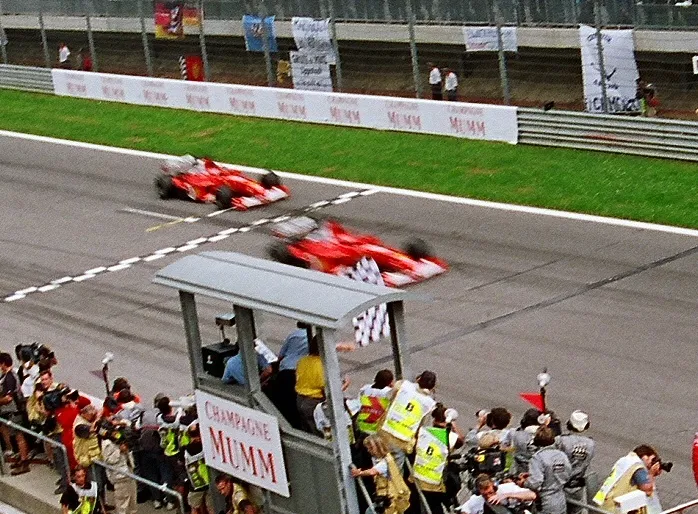
SubscribePublic backlash intensified during the late 1990s and early 2000s, peaking at the 2002 Austrian Grand Prix when Rubens Barrichello was ordered to let Ferrari teammate Michael Schumacher pass for the win. The resulting outcry prompted the FIA to officially ban team orders that could influence race outcomes ahead of the 2003 season. Despite the strict prohibition, teams continued to use subtle radio cues, such as the famous 2010 German Grand Prix message telling Felipe Massa that Fernando Alonso was faster.
Recognizing the rule was virtually unenforceable and routinely bypassed, the FIA removed the ban ahead of the 2011 season. Since then, modern powerhouse teams like Mercedes and Red Bull have openly utilized strategic directives to manage title contenders and secure constructors" points. While these tactical choices often maximize championship success, they continue to test the patience of drivers and fans who value pure, unfiltered competition on the track.
Modern Era Strategies and Ongoing Debates
The return of legal team orders in 2011 ushered in a new era of calculated race management, particularly during the dominant hybrid power unit era. Mercedes frequently navigated tense situations between Lewis Hamilton and Valtteri Bottas, balancing team dominance with internal fairness. For instance, at the 2017 Hungarian Grand Prix, Bottas yielded third position to Hamilton, only to receive the position back on the final corner when Hamilton could not overtake the frontrunners.
Red Bull Racing has similarly faced scrutiny over internal driver dynamics and strategic calls. During the 2022 Spanish Grand Prix, Sergio Perez was instructed to yield his lead to Max Verstappen, prompting the Mexican driver to publicly request clarity on team directives. Later that season at the São Paulo Grand Prix, tensions boiled over when Verstappen openly refused to obey team orders to let Perez pass, highlighting the fragile balance of managing two competitive drivers.
Motorsport authorities and team principals consistently defend these directives as vital components of a team sport where millions of dollars and world championships are at stake. Constructors argue that preserving tires, avoiding costly collisions, and prioritizing the driver with the stronger championship outlook are essential for long-term success. Critics and purists, however, argue that these decisions detract from the competitive integrity of racing.
Ultimately, team orders reflect the complex reality of elite motorsport, where individual glory constantly clashes with corporate and team objectives. As new generations of drivers enter the sport and technical regulations evolve, the debate surrounding team instructions and tactical racing will undoubtedly remain a defining characteristic of Formula One.