
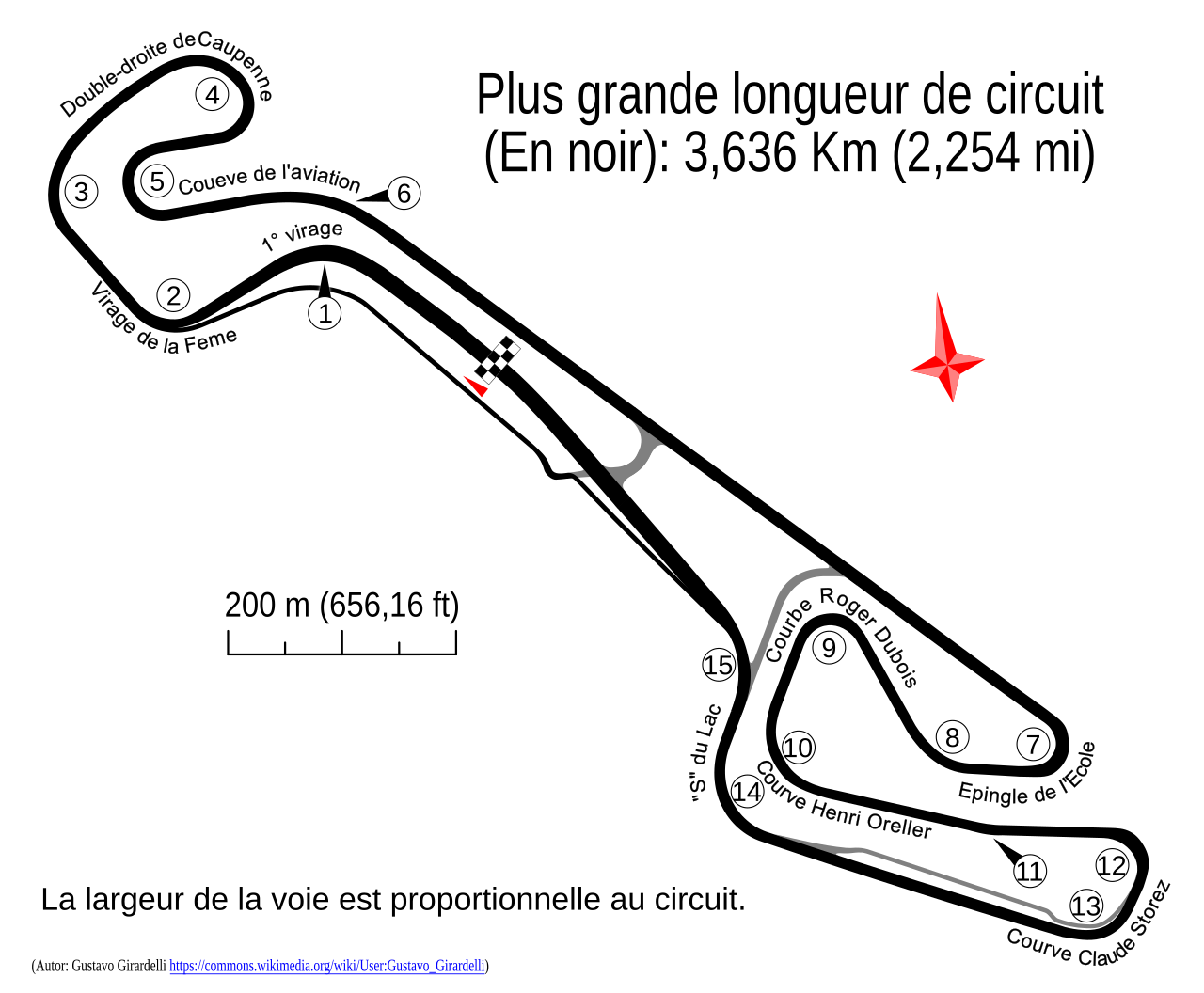
Circuit Paul Armagnac stands proudly in the commune of Nogaro within the Gers department of southwestern France as a true pioneer of European motorsport infrastructure. Named after the local racing driver Paul Armagnac, who tragically lost his life during practice for the 1962 1000 km de Paris, the venue has spent decades cementing its legacy in racing history.
Motorsports in the area originally began on public street circuits in 1953 with the Rallye de l'Armagnac. However, growing public safety concerns following the devastating 1955 Le Mans disaster prompted organizers to pursue a dedicated, permanent racing facility away from public roadways.
Related Stories

Get the Latest Sports News from Seymour's Bird
Receive the latest updates on football, basketball,and technology news directly in your inbox. It's free!
SubscribeConstruction officially commenced in 1959 near the local airport, and the venue opened its gates on October 3, 1960, earning the distinction of being France's very first purpose-built race circuit. The inaugural event featured the Nogaro Grand Prix for Formula Junior cars, won by driver Bruno Basini.
Over the years, the track underwent several expansions and modernizations, stretching from its original 1.752-kilometer layout to its current 3.636-kilometer configuration. Upgrades in 2007 further modernised the facilities with a new control tower, an expanded pitlane, and a widened racing surface.
Decades of Legendary International Racing
The historic circuit has welcomed a vast array of prestigious international racing series throughout its operational lifetime, including Formula Two championships during the late 1970s. It also played host to the French motorcycle Grand Prix in 1978 and 1982, though safety disputes led to a major team boycott that permanently shifted top-tier motorcycle events away from the venue.
Designed with a relatively flat profile and featuring two long, nearly parallel straights linked by technical corner sections, the track continues to challenge drivers across multiple generations. Notable track records were established by iconic names, such as Alessandro Zanardi's blistering Formula 3000 lap time set in 1991.
Modern events at the circuit remain vibrant, featuring staples like the Coupes de Pâques de Nogaro, FFSA GT, and various regional touring car and cup competitions. These events ensure that the rural French commune continues to roar with the sound of high-performance engines every racing season.
As it looks toward the future, Circuit Paul Armagnac remains an essential pillar of French motorsport culture, honoring its namesake's passionate legacy while continuing to host competitive racing across diverse categories.