
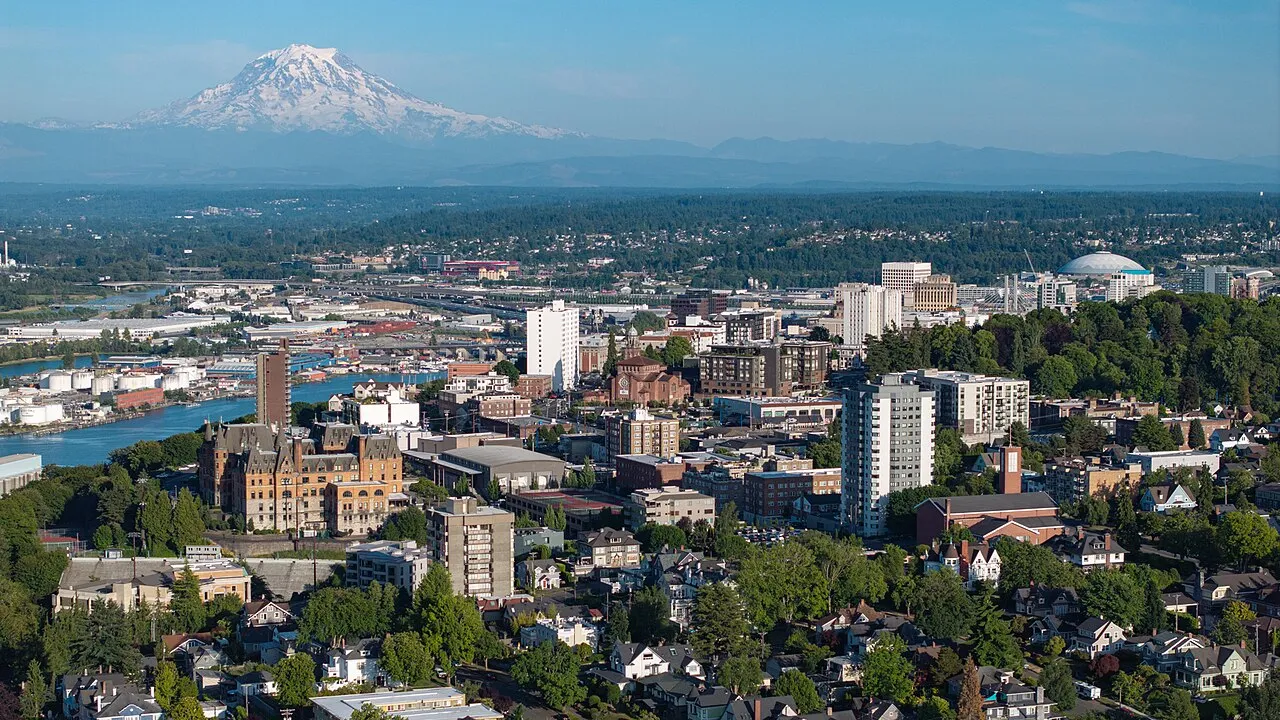
Tacoma Washington stands as a prominent port city and the county seat of Pierce County, serving as a vital economic and cultural anchor for the South Sound region. Situated along Puget Sound roughly 30 miles from Seattle, the city has long captured national attention for its strategic location and historical significance as the western terminus of the Northern Pacific Railroad.
The city earned its famous moniker, the City of Destiny, in the late 19th century when railroad planners chose Commencement Bay as their final western destination. Connecting deep-water shipping with transcontinental rails fueled an initial industrial boom, though the community also faced historic hardships, including the dramatic 1940 collapse of the Tacoma Narrows Bridge known locally as Galloping Gertie.
Related Stories

Get the Latest Sports News from Seymour's Bird
Receive the latest updates on football, basketball,and technology news directly in your inbox. It's free!
SubscribeLike many industrial American cities, Tacoma experienced a prolonged period of economic decline and suburbanization through the mid-20th century. Civic leaders and local residents later characterized downtown areas during the 1970s and 1980s as heavily impacted by disinvestment, setting the stage for a critical turning point in local governance and community planning.
Beginning in the early 1990s, a dedicated wave of revitalization reshaped the urban landscape. Major milestones included the establishment of the University of Washington Tacoma campus, the introduction of the T Line light rail service, and the development of world-class cultural attractions such as the Museum of Glass and the Washington State History Museum.
Historical Trials and Community Resilience

Throughout its complex history, Tacoma navigated significant social and economic trials that tested its resilience. Early decades featured rapid population growth driven by transcontinental connections and regional gold rushes, alongside labor disputes and severe economic downturns during the Great Depression.
During the winter of 1929 and 1930, the city faced unprecedented challenges when extreme cold weather caused mass power outages and forced the shutdown of key supply dams. In a memorable display of resourcefulness, the engines of the aircraft carrier USS Lexington provided emergency electricity to keep the community running.
The community also confronted darker chapters, including the tragic expulsion of Chinese residents in 1885 and mid-century governmental corruption scandals that prompted voters to adopt a modern council-manager system in the 1950s to restore transparency and public trust.
Despite these historical obstacles, modern Tacoma has successfully reinvented itself into a thriving hub of education, arts, and technological infrastructure, highlighted by the historic restoration of the waterfront and the ongoing expansion of its vibrant downtown districts.