
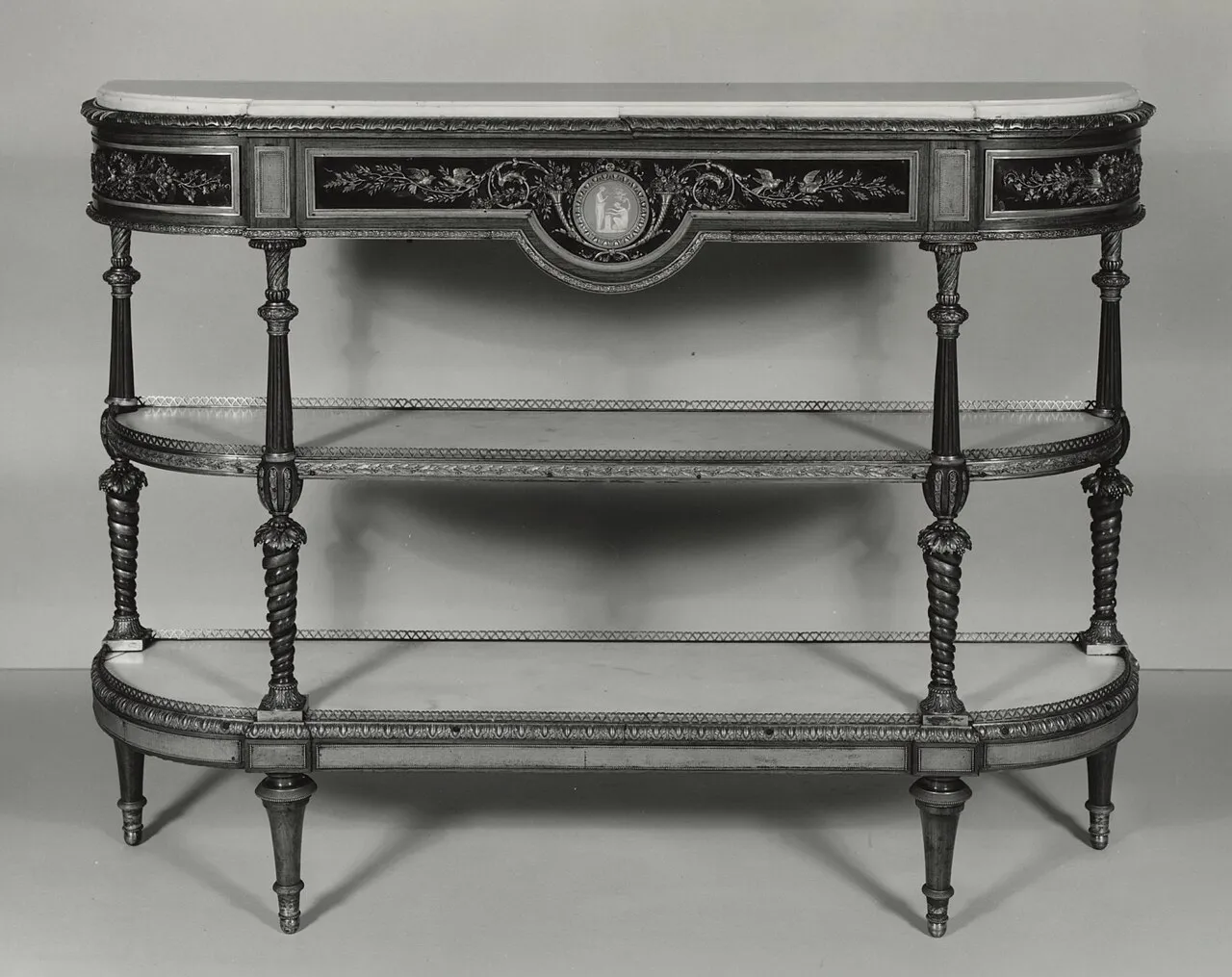
Adam Weisweiler remains one of the most celebrated master cabinetmakers of the Louis XVI period, operating out of Paris during an era of extreme luxury and political upheaval. Born in Neuwied-am-Rhein around 1750, he cultivated his exceptional woodworking skills early on, allegedly training in David Roentgen's workshop before relocating to Paris.
By March 1778, he officially achieved master status, allowing him to stamp his creations and build an enduring reputation among Europe's elite. His distinctive style relied heavily on collaborations with marchands-merciers like Dominique Daguerre, who supplied exotic materials including Japanese lacquer panels, ebony, and refined gilt-bronze mounts.
Related Stories

Get the Latest Sports News from Seymour's Bird
Receive the latest updates on football, basketball,and technology news directly in your inbox. It's free!
SubscribeUnlike many artisans whose careers crumbled during the turbulence of the French Revolution, Weisweiler successfully adapted to changing political landscapes. By 1810, he was actively supplying Queen Hortense and collaborating with bronze-caster Pierre-Philippe Thomire, demonstrating a remarkable resilience in his trade.
His workshop legacy extended well beyond his active years, with his son Jean Weisweiler managing operations until 1844. Today, pieces bearing his hallmark or attributed through his meticulous craftsmanship are preserved in prestigious institutions like the Victoria and Albert Museum and the Metropolitan Museum of Art.
Exquisite Craftsmanship and Royal Commissions
Weisweiler specialised in refined, delicate furniture pieces characterized by slim legs, light interlaced stretchers, and exquisite low-relief gilt-bronze plaques. His integration of Sèvres porcelain and pietra dura panels into tables and secretaries set a standard for neoclassical elegance.
Through dealer Dominique Daguerre, Weisweiler crafted a stunning writing table composed of steel, lacquer, ebony, and gilt-bronze for Marie Antoinette at the château de Saint-Cloud in 1784. His royal clientele extended internationally, providing exquisite cabinetry for the Prince Regent at Carlton House in London.
Art historians note that his creations often reflected the sophisticated tastes of his merchant partners rather than just standard workshop output. A notable suite of furniture created for the king of Naples at Caserta highlights how closely his designs aligned with the overarching vision of Daguerre.
Despite lacking pictorial marquetry in his repertoire, his distinct use of fine lines and luxurious materials ensures his work remains highly coveted by collectors and museums worldwide as a pinnacle of eighteenth-century French artistry.