
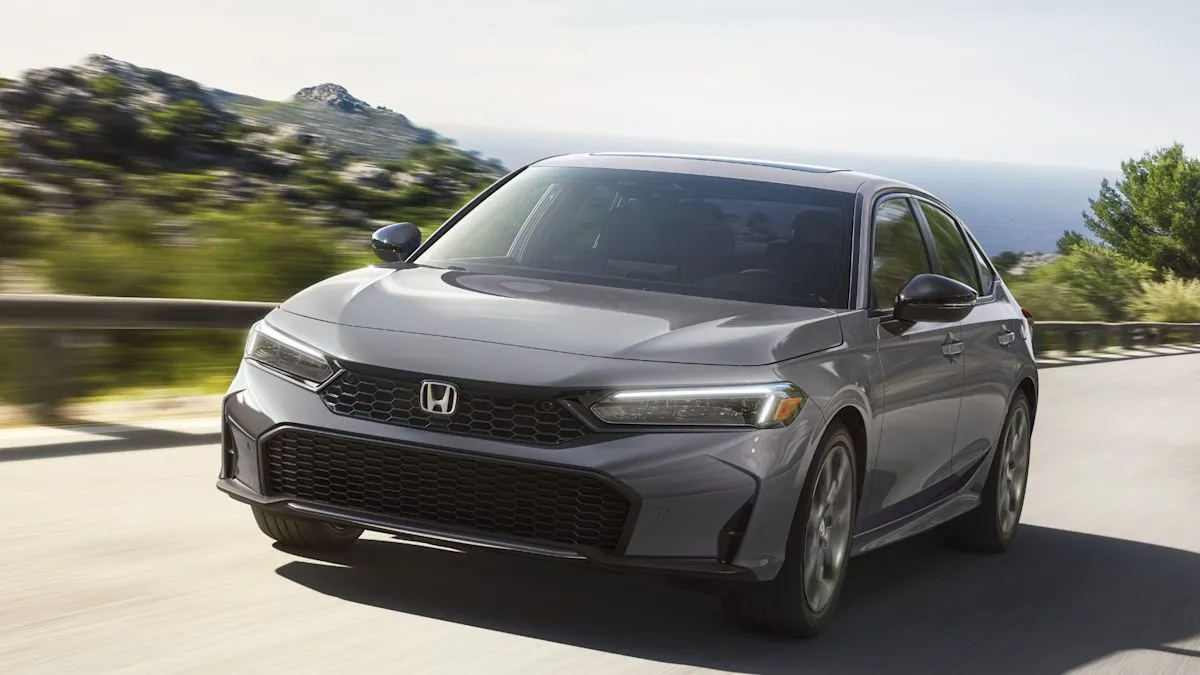
Honda Civic owners are facing alarming seat belt malfunctions that range from sudden accidental locking to unexpected pyrotechnic smoke, yet federal regulators have yet to issue a single recall for the restraint systems. While most drivers view a seat belt as a simple, unglamorous strap, modern automotive engineering has transformed these passive restraints into complex, chemically active safety devices that few motorists truly understand.
A detailed review of National Highway Traffic Safety Administration complaints for the tenth-generation model reveals rare instances where standard features turned into major hazards. In one Missouri incident, a child seat belt cinched so tightly it left physical marks, forcing the family to pull over on the highway and physically unbolt the hardware with a socket set.
Related Stories

Get the Latest Sports News from Seymour's Bird
Receive the latest updates on football, basketball,and technology news directly in your inbox. It's free!
SubscribeSuch episodes highlight the thin line between normal operation and unexpected danger, specifically concerning switchable retractors designed to secure child safety seats. When these mechanisms engage incorrectly on a passenger without a car seat, trapped occupants face terrifying situations with no intuitive manual release option available on the side of the road.
Beyond mechanical locking issues, internal components carry hidden risks that alarm drivers upon failure. A Mississippi complaint documented a loud pop and smoke emerging from the track, which repair shops traced back to a ruptured gas cartridge inside the seat belt's pretensioner.
Understanding Modern Restraint Systems

Modern vehicle architecture relies on pyrotechnically activated tensioners containing small explosive charges designed to fire instantly during severe collisions. Because these devices share chemical properties with airbag inflators, they represent single-use systems that must be completely replaced after an accident.
Despite these documented risks, federal safety agencies typically require large-scale, repeatable patterns across thousands of vehicles before launching official investigations or ordering formal recalls. Consequently, isolated consumer complaints often fall below the regulatory threshold, leaving motorists to navigate the complex realities of modern automotive safety hardware on their own.
Automotive safety standards require modern seat belts to meet rigorous federal performance criteria, incorporating advanced technologies that go far beyond traditional lap belts. These engineering advancements successfully save thousands of lives annually, but they also introduce new maintenance and replacement complexities for vehicle owners.
Used car buyers rarely check whether a vehicle's restraint systems have been compromised by prior minor collisions or if previous owners neglected to replace spent pretensioners. Dealership assurances and standard five-star crash test ratings provide little insight into how aging safety equipment functions years down the road.