
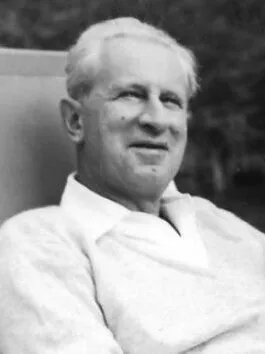
Herbert Marcuse emerged as one of the twentieth century's most influential social critics and political theorists, leaving an indelible mark on modern intellectual discourse. Associated with the renowned Frankfurt School of critical theory, his extensive writings challenged the fundamental structures of contemporary capitalism, technology, and popular culture.
Born in Berlin in 1898 into an integrated upper-middle-class family, Marcuse pursued his academic studies at the Friedrich Wilhelm University of Berlin and later at the University of Freiburg, earning his PhD under Martin Heidegger. His early academic journey laid the intellectual groundwork for a lifetime dedicated to examining systems of social control and political repression.
Related Stories

Get the Latest Sports News from Seymour's Bird
Receive the latest updates on football, basketball,and technology news directly in your inbox. It's free!
SubscribeDuring the tumultuous decades of the 1960s and 1970s, Marcuse achieved global prominence as the pre-eminent theorist and intellectual figurehead of the New Left student movements across West Germany, France, and the United States. Works such as Eros and Civilization and One-Dimensional Man inspired generations of radical intellectuals, activists, and students seeking alternatives to traditional Western liberalism.
Beyond his academic pursuits, Marcuse contributed significantly to historical intelligence efforts during World War II, serving as a senior analyst for the Office of Strategic Services where he specialized in evaluating Nazi ideology. His legacy endures through his profound critiques of mass culture, repressive tolerance, and the ongoing quest for human liberation.
Philosophy, Legacy, and Later Years
Marcuse's philosophical framework heavily integrated insights from Karl Marx and Sigmund Freud, producing revolutionary critiques regarding societal conformity and consumer capitalism. He famously argued that advanced industrial societies utilized new forms of psychological and social control to suppress genuine political dissent and revolutionary action.
Throughout his academic career, Marcuse held prestigious teaching positions at Columbia University, Brandeis University, and the University of California, San Diego, where he continued to mentor and influence emerging thinkers. His unique ability to connect with younger generations stemmed from his active engagement with contemporary culture, including youth activism and rock and roll.
In his later years, Marcuse maintained an active schedule of international lectures, discussions, and writing engagements, remaining deeply committed to fostering critical dialogue on freedom and social change. His intellectual partnerships with figures like Jürgen Habermas and his defense of political dissidents underscored his lifelong dedication to emancipatory politics.
Marcuse passed away in July 1979 following a stroke while visiting Germany, concluding a remarkable life dedicated to philosophical inquiry and social justice. Decades later, his concepts continue to resonate deeply within modern critical theory, cultural studies, and sociological examinations of contemporary mass media.