
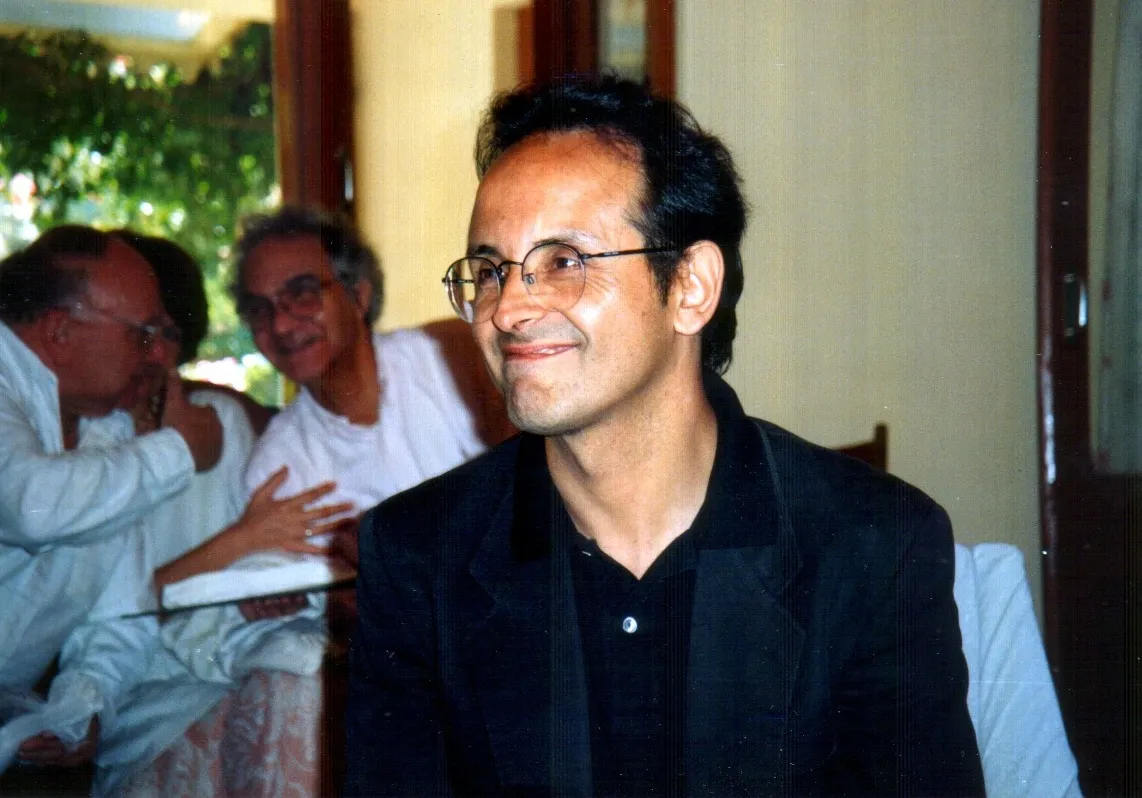
Francisco Varela stands as a towering figure in modern biology, philosophy, and neuroscience, having left an indelible mark on how humanity understands living systems and consciousness. Born in Talcahuano, Chile, on September 7, 1946, Varela embarked on an intellectual journey that spanned continents, academic disciplines, and cultural traditions, ultimately bridging the gap between Western science and Eastern contemplative practices.
Educated at the Pontifical Catholic University of Chile and the University of Chile before earning his PhD at Harvard University under the supervision of Torsten Wiesel, Varela laid rigorous foundations for his future innovations. His academic pursuits were temporarily disrupted by the 1973 military coup led by Augusto Pinochet, forcing him and his family into a seven-year exile in the United States before he eventually returned to teach in his home country and later settled in France.
Related Stories

Get the Latest Sports News from Seymour's Bird
Receive the latest updates on football, basketball,and technology news directly in your inbox. It's free!
SubscribeAlongside his mentor Humberto Maturana, Varela introduced the revolutionary concept of autopoiesis to biology, defining the self-maintaining and self-creating chemistry of living cells. This foundational theory expanded far beyond biology, influencing fields ranging from sociology to cybernetics and reshaping how scholars conceptualize the autonomy of living organisms.
Beyond his theoretical contributions to biology, Varela was a pioneer in cognitive science and neuroscience, championing the concept of neurophenomenology. By combining first-person conscious experience with rigorous scientific inquiry, he opened new pathways for exploring the human mind, cementing his legacy as a truly interdisciplinary visionary before his passing in Paris on May 28, 2001.
Bridging Science and Buddhism at Mind and Life
In addition to his laboratory work, Francisco Varela played a pivotal role in fostering a profound dialogue between modern scientific disciplines and ancient spiritual traditions. His deep personal familiarity with Tibetan Buddhism led him to co-found the Mind and Life Institute in 1987 alongside R. Adam Engle, creating a collaborative space for scientists and the Dalai Lama to exchange insights.
The Institute has since evolved into a major global nexus supporting multidisciplinary scientific investigations into meditation, mind sciences, and contemplative practices. Varela's own integration of Buddhist philosophy with cognitive science culminated in landmark publications like The Embodied Mind, co-authored with Evan Thompson and Eleanor Rosch.
Varela supported the framework of embodied cognition, arguing that human consciousness cannot be separated from the physical body and the surrounding environment in which it operates. His intellectual openness allowed him to weave together phenomenology, mathematics, and biology in a way that continues to inspire researchers across multiple generations.
Although hepatitis C cut his life short at the age of 54, Varela's intellectual footprint remains vibrant through his extensive body of written work, his foundational concepts, and the thriving institutions he helped establish. His life continues to serve as an enduring inspiration for thinkers seeking to dissolve the boundaries between science, philosophy, and human experience.