
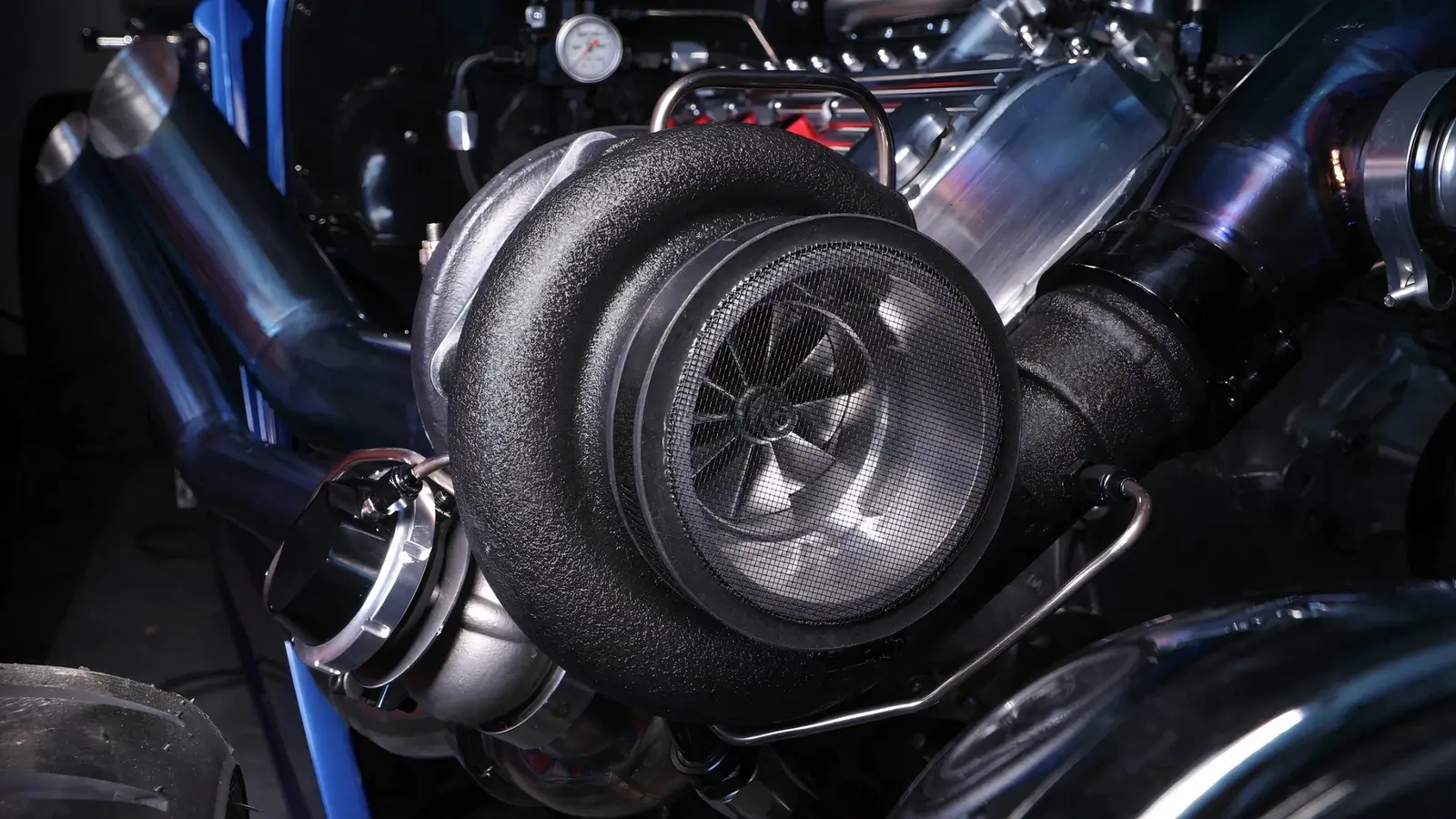
Turbo lag has long been the bane of performance engineers ever since forced induction moved from farm equipment into sports cars, creating a frustrating delay between throttle input and power delivery. Over the decades, the automotive industry has poured immense resources into engineering around this hurdle, leading to modern solutions ranging from Ferrari's gear-driven patents to the electrically assisted turbochargers found in the latest Porsche models. While classic forced induction brought massive horsepower gains to legends like the Bugatti Veyron and Chevrolet Corvette C8 ZR1, the physical limitation of spooling exhaust-driven turbines remained a persistent challenge.
The historical roots of turbocharging trace back to Oldsmobile's Jetfire in 1962, followed by dominant motorsport applications like the Porsche 917/10 and early Formula 1 innovations by Renault and Ferrari. Early racing anti-lag systems relied on injecting fuel or air directly into exhaust manifolds to keep turbines spinning, but these aggressive setups proved disastrous for emissions and component longevity. Consequently, public roads demanded entirely different engineering approaches that could deliver instant throttle response without destroying exhaust components or violating strict environmental regulations.
Related Stories

Get the Latest Sports News from Seymour's Bird
Receive the latest updates on football, basketball,and technology news directly in your inbox. It's free!
SubscribeModern road cars have successfully tackled this issue through sophisticated software and electrification, utilizing methods like torque fill during gear changes in hybrid powertrains. By employing electric motors to instantly supply torque gaps between shifts, manufacturers ensure acceleration remains smooth and linear without relying on harsh exhaust-dumping anti-lag methods. Furthermore, advanced innovations like the electric turbocharger in the Porsche 911 GTS independently spin the turbine using an electric motor, making maximum boost available the exact moment the driver demands it.
As global emissions regulations continue to tighten, the clever engineering workarounds developed by automakers represent the pinnacle of street-legal performance technology. These cutting-edge systems allow everyday enthusiasts to enjoy instantaneous power delivery that rivals racing applications without sacrificing engine durability. Ultimately, the relentless pursuit of lag-free performance has transformed forced induction into a seamless, highly efficient art form that defines modern automotive engineering.
Evolution of Anti-Lag Technology in Modern Cars
The evolution of anti-lag technology reflects a fascinating journey from brutal motorsport solutions to sophisticated consumer vehicle applications designed for everyday usability. Traditional rally and racing anti-lag systems subjected exhaust manifolds and turbo turbines to extreme thermal stress, making them entirely illegal for street use due to excessive noise and emissions.
Automakers had to pivot toward inventive engineering, leading to breakthroughs such as BMW's early integration of torque-fill assistance in its trailblazing i8 hybrid sports car. This approach cleverly blended electric motor assistance with forced induction to mask power delays during gear transitions, setting a new benchmark for hybrid performance efficiency.
More recently, patent applications from manufacturers like Ferrari reveal continued experimentation with mechanical energy recovery, utilizing excess crankshaft kinetic energy through specialized gearsets to keep turbochargers spooled up. These inventive mechanical and electrical fusions highlight the industry's unwavering commitment to achieving absolute throttle immediacy.
Ultimately, the combination of hybrid-electric assistance and clever turbo design has turned what was once an unavoidable compromise into a seamless driving experience. Drivers no longer have to choose between high-output forced induction and instant throttle response, marking a monumental victory for modern automotive innovation.