
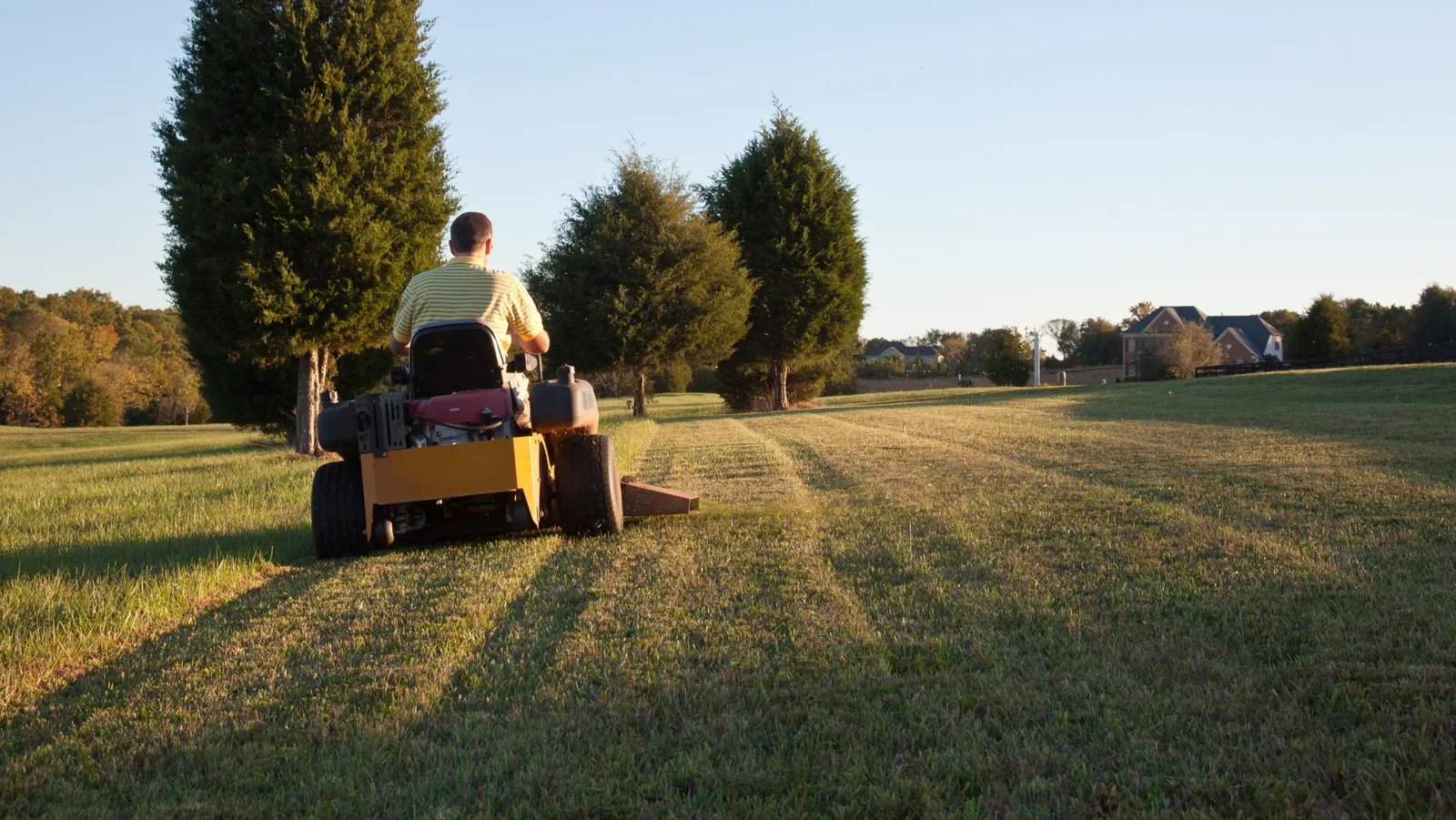
Zero-turn mower operators often make the mistake of pivoting sharply at the end of each pass, leaving large divots and damaged grass across their yards. Unlike traditional riding lawn mowers, zero-turn models utilize dual independent levers controlling separate hydrostatic transmissions for each rear wheel.
The primary benefit of a zero-turn design is exceptional maneuverability and sharp cutting capabilities. However, even lightweight introductory models like the Murray Cruz 42-inch deck tip the scale at a hefty 500 pounds, meaning abrupt turns can easily twist and tear the turf.
Related Stories

Get the Latest Sports News from Seymour's Bird
Receive the latest updates on football, basketball,and technology news directly in your inbox. It's free!
SubscribeWhen operators spin the heavy machine around in place, the friction from the stationary inside wheel causes immediate stress to the grass roots. This risk increases significantly if soil conditions are moist or soggy from recent watering or rain, leading to severe lawn scarring.
Preventing this destructive lawn wear does not require sacrificing the efficiency of your zero-turn mower. Instead of executing full 180-degree pivots at every row end, adopting a simple navigational adjustment will keep your grass looking pristine all season long.
Mastering Three-Point Turns for Healthy Turf
Employing a three-point turn, also known as a K-turn, ensures that both rear wheels remain in motion so the inside tire never pivots in place. This technique mirrors how a driver turns a car around on a narrow two-lane road without having enough space for a continuous loop.
To execute a K-turn on your mower at the end of a pass, you pull forward while angling slightly away, shift into reverse to adjust your position, and then move forward again in the opposite direction. This continuous rolling motion eliminates the destructive twisting force on your lawn.
While pivoting on a single wheel saves a few seconds of operating time, the resulting turf repair requires far more effort and patience to fix. Taking an extra moment to complete proper turns guarantees clean parallel passes and a healthy, undamaged lawn.
New operators frequently learn this lesson the hard way after watching their pristine turf get chewed up by aggressive handling. By practicing patience and utilizing structured turning methods, you can maximize your mower's performance without compromising your landscaping.