
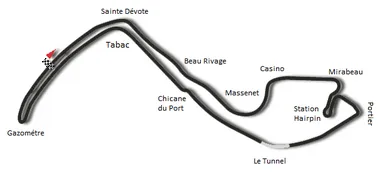
Graham Hill secured a legendary victory at the 1969 Monaco Grand Prix after navigating his Lotus-Ford through a chaotic race filled with mechanical attrition on the streets of Monte Carlo. Starting from fourth position, the veteran British driver capitalised on misfortune striking his rivals to claim his 14th career win and cement his status as the master of the Principality.
Jackie Stewart had dominated the early stages of the weekend by setting a blistering pace in his Matra-Ford to capture pole position and lead the opening laps. However, drama struck on lap 22 when a halfshaft failure forced Stewart into a premature retirement, handing the initiative over to the chasing pack.
Related Stories

Get the Latest Sports News from Seymour's Bird
Receive the latest updates on football, basketball,and technology news directly in your inbox. It's free!
Subscribe"The conditions and the relentless layout of the circuit always punish machinery to the absolute limit," noted racing observers on the grueling nature of the 80-lap endurance test. Hill maintained his composure while other front-runners fell victim to mechanical failures and suspension issues across the afternoon.
Piers Courage delivered an impressive performance to finish second in a Brabham-Ford entered by Frank Williams, while Jo Siffert rounded out the podium in third place for Lotus-Ford. The grueling race left only a handful of cars running at the checkered flag as reliability proved to be the ultimate decider.
Endurance and Attrition Shape Monte Carlo
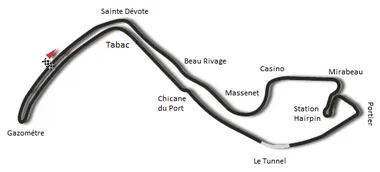
The 1969 event proved to be a harsh test of engineering durability as numerous top-tier cars failed to reach the finish line on the tight street circuit. Mechanical troubles sidelined contenders like Chris Amon and Jean-Pierre Beltoise early on, radically altering the competitive landscape.
Richard Attwood drove a steady and reliable race to finish fourth for Lotus-Ford, staying out of trouble while chaos unfolded around him. Behind him, Bruce McLaren and Denny Hulme managed to salvage valuable championship points for McLaren-Ford by finishing fifth and sixth respectively.
The race also marked a poignant moment in Formula One history as it served as the final World Championship appearance for Cooper as a constructor and Maserati as an engine supplier. Vic Elford brought his Cooper-Maserati home in seventh position to close out an iconic chapter for the historic marque.
With this historic triumph, Graham Hill extended his legendary record at Monte Carlo and added crucial points to the constructors" and drivers" standings as the 1963 Formula One season progressed toward its European rounds.