
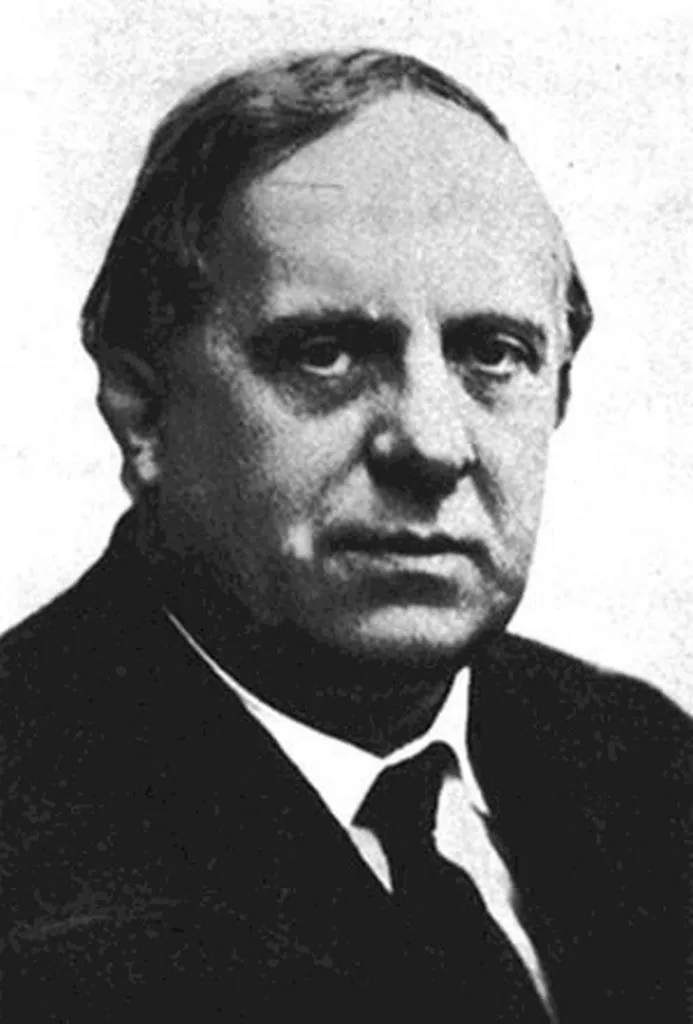
Frederick William Lanchester stood as one of Britain's most brilliant and versatile engineering minds, leaving an indelible mark on both automotive history and aviation science. Born in London in 1868, this polymath possessed a rare creative intellect that bridged the worlds of mechanical invention and theoretical physics. Despite lacking a formal university degree, Lanchester's self-driven curiosity propelled him into the upper echelons of British technical innovation during a period of rapid industrial transformation.
His contributions to early motoring changed the landscape of personal transportation forever. In 1895, Lanchester successfully designed and built the very first British four-wheeled petrol-driven car, featuring an air-cooled engine and an innovative epicyclic gearbox. Alongside his brothers, he established the Lanchester Motor Company, introducing numerous mechanical advancements that later became industry standards across the globe. From disc brakes to wire wheels, his engineering foresight solved complex mechanical problems that others had simply ignored.
Related Stories

Get the Latest Sports News from Seymour's Bird
Receive the latest updates on football, basketball,and technology news directly in your inbox. It's free!
SubscribeBeyond his triumphs in automobile manufacturing, Lanchester made foundational breakthroughs in aerodynamics and operations research. His mathematical analysis of flight and stability during the early 20th century provided crucial insights for the burgeoning aviation industry. Furthermore, his work during the First World War helped shape military technology, cementing his reputation as a visionary thinker whose ideas extended far beyond the commercial constraints of his era.
Despite his immense technical genius, Lanchester struggled with commercial success and spent his final years in straitened financial circumstances before his death in 1946. Yet, history has vindicated his extraordinary intellect. Today, automotive historians and engineers remember him as a true pioneer whose relentless experimentation laid the groundwork for modern vehicular engineering.
Innovations That Shaped The Modern Automotive Industry
Lanchester's workshop was a crucible of invention where traditional engineering limits were constantly challenged and rewritten. When he co-founded the Lanchester Engine Company at the turn of the century, he refused to rely on conventional components, choosing instead to design custom solutions for nearly every part of his vehicles. His 10-horsepower car, introduced in 1901, incorporated a central engine placement and a side-mounted tiller, showcasing his unique approach to ergonomics and weight distribution.
Among his most enduring technical achievements was the invention of the disc brake, for which he secured a patent in December 1902. This revolutionary braking mechanism clamped the clutch disc directly, offering superior stopping power compared to the external systems used by his contemporaries. In addition, his invention of the torsional crankshaft vibration damper and the harmonic balancer solved critical engine balance issues in multi-cylinder engines.
Lanchester also introduced practical driving controls that motorists take for granted every single day. He is widely credited with inventing or popularizing the accelerator pedal, a device that drastically simplified engine speed control and improved safety on public roads. His introduction of pressure-fed oil bearings, hollow connecting rods, and stamped steel pistons further demonstrated his holistic approach to improving mechanical reliability and engine efficiency.
Although corporate disputes and financial hurdles eventually distanced him from his own motor company, his legacy as a technical consultant for Daimler and other firms ensured his influence endured. Frederick Lanchester's brilliant mind transformed a messy collection of experimental contraptions into a sophisticated science, securing his permanent place among the titans of engineering history.