
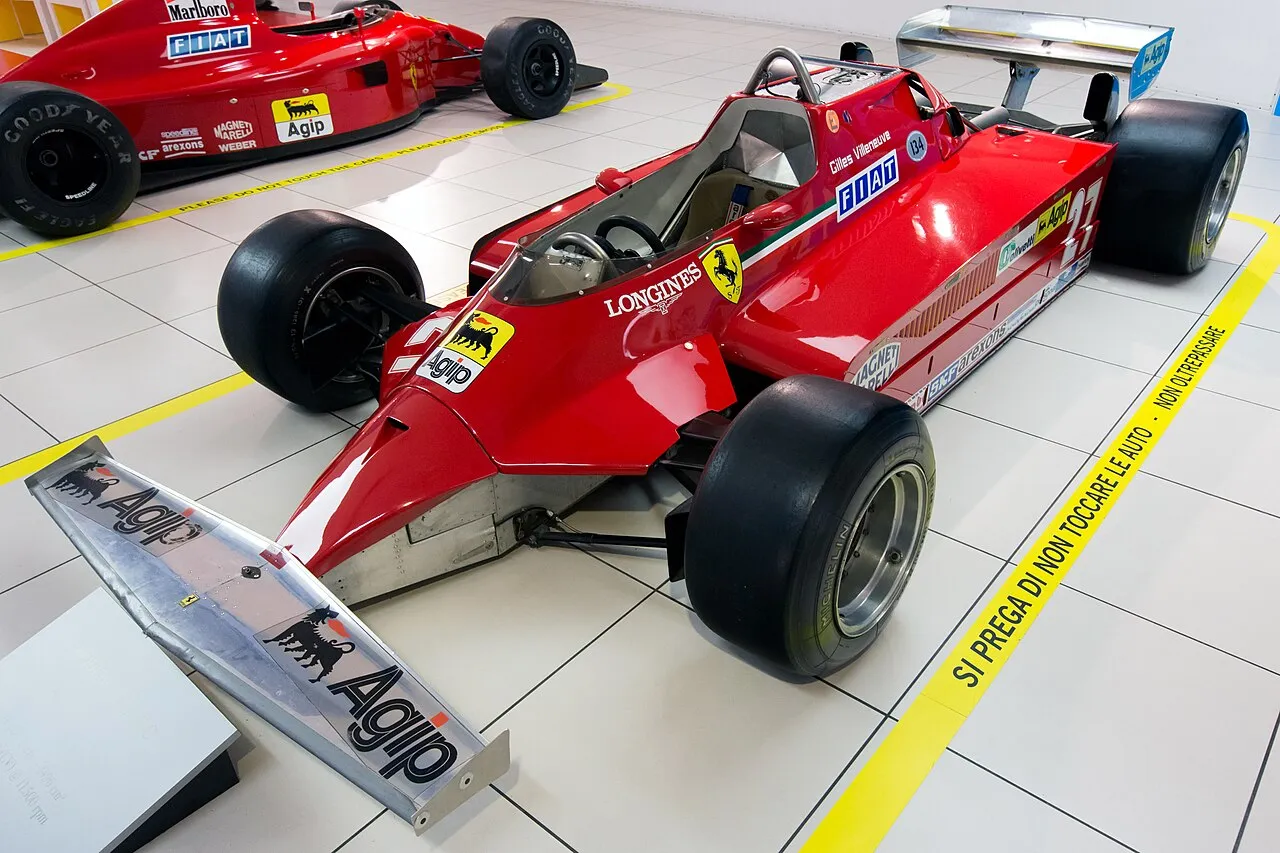
Ferrari 126C stands as Scuderia Ferrari's pioneering venture into turbocharged Formula One machinery, competing in the world championship from the 1981 season through 1984. Conceived to replace the aging 312T series, the car was initially designed by Mauro Forghieri and later refined by Harvey Postlethwaite to harness the era's emerging ground effect aerodynamic principles.
"The new turbocharged V6 package allowed us to finally clear the airflow obstructions caused by our previous wide 180-degree V12 engine," noted historical technical assessments of the Maranello workshop. Early development iterations included experimentations with the Comprex pressure wave supercharger before the team committed to twin KKK turbochargers that delivered massive horsepower figures.
Related Stories

Get the Latest Sports News from Seymour's Bird
Receive the latest updates on football, basketball,and technology news directly in your inbox. It's free!
SubscribeDriven by legends such as Gilles Villeneuve and Didier Pironi, the initial 126CK variant showcased incredible straight-line speed despite notoriously difficult handling characteristics. Villeneuve famously dubbed the machine "a big red Cadillac" due to its severe turbo lag and tricky aerodynamic balance on fast circuits.
The arrival of engineer Harvey Postlethwaite ahead of the 1982 season triggered a major technical overhaul, introducing Ferrari's first genuine full aluminum honeycomb monocoque chassis. Despite handling hurdles and tragic team circumstances, the developed 126C series eventually propelled Scuderia Ferrari to consecutive constructors championships in 1982 and 1983.
Technical Evolution and Championship Success of the Ferrari 126C
Technical evolution defined the lifespan of the Ferrari 126C family as regulations shifted toward mandatory flat bottoms and restricted fuel consumption. Engineers continually extracted immense power from the turbocharged power unit, pushing output past 800 horsepower in qualifying trims by the 1983 season.
"Our engine remained among the most potent on the grid, yet generating adequate downforce stayed a constant battle against our rivals," explained team engineers regarding the later 1984 specification known as the 126C4. High wing angles were frequently required to compensate for a lack of mechanical grip, impacting top speeds on long straights.
Across four competitive campaigns, iterations of the 126C secured 10 Grand Prix victories, 10 pole positions, and cemented a legendary status in motorsport history. Michele Alboreto claimed the final victory for the lineage at Zolder in 1984 before the chassis was succeeded by the 156/85.
Ultimately, the Ferrari 126C cemented Maranello transition into the modern turbo era, blending raw horsepower with pioneering engineering breakthroughs that shaped the trajectory of Formula One development during the 1980s.