
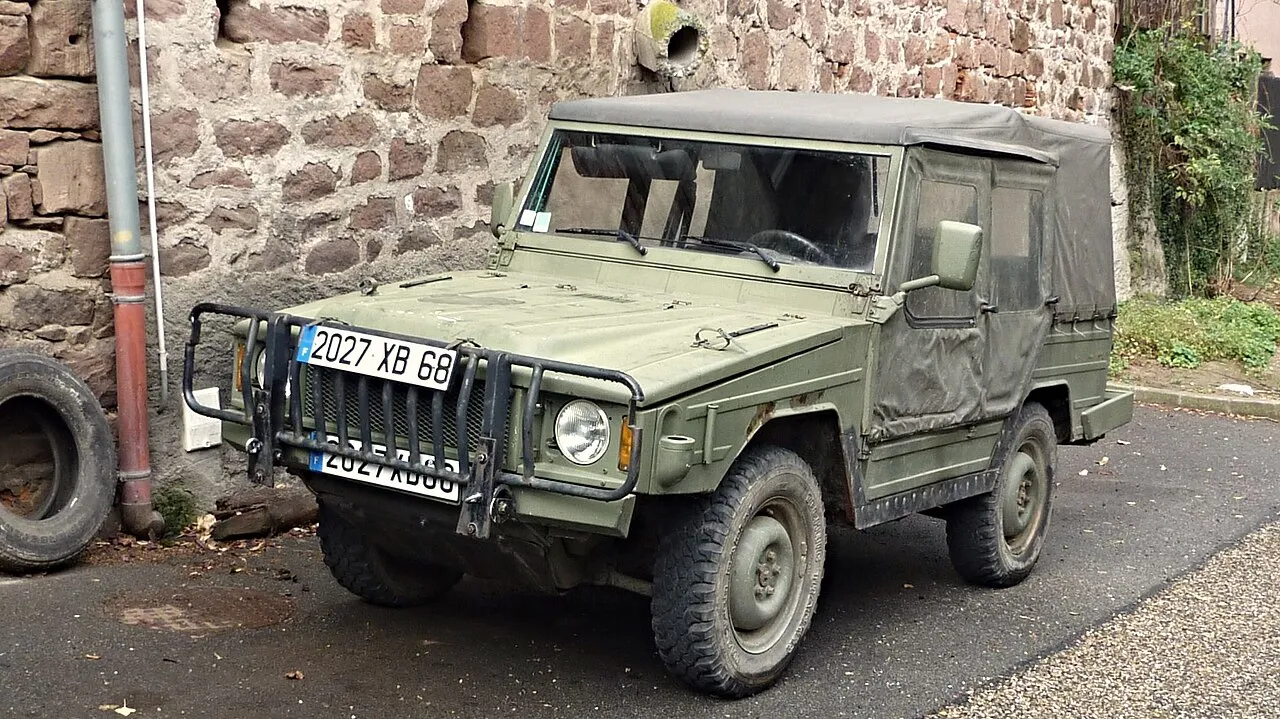
The Volkswagen Iltis, officially designated as the Type 183, stands as a remarkable chapter in automotive and military history. Developed by Volkswagen in the 1970s for the West German military, this rugged light utility vehicle filled a critical operational gap following the collapse of the ambitious "Europa Jeep" project.
Engineered by Audi using a modified Munga platform and components from the Audi 100, the Iltis featured a robust four-wheel-drive system that ultimately served as the technological blueprint for Audi's revolutionary quattro system introduced in 1980. Its capability allowed it to effortlessly pass rigorous government trials, securing contracts with the Bundeswehr, the Luftwaffe, and the Bundesmarine.
Related Stories

Get the Latest Sports News from Seymour's Bird
Receive the latest updates on football, basketball,and technology news directly in your inbox. It's free!
SubscribeBeyond its military service in West Germany, the vehicle's production footprint expanded internationally when Bombardier Inc. acquired manufacturing rights in Canada. Canadian-produced units were supplied to both the Canadian and Belgian armed forces during the early 1980s, showcasing the vehicle's international utility and enduring design resilience.
The vehicle also carved out a legendary status in motorsports when drivers Freddy Kottulinsky and Gerd Löffelmann piloted an Audi-prepared Iltis to victory at the grueling Paris-Dakar Rally in 1980. Although its civilian market success remained limited due to its utilitarian nature and high cost, the Iltis remains an engineering milestone in four-wheel-drive development.
Engineering Specifications and Legacy of the Type 183

Underneath its modest exterior, the Volkswagen Iltis was powered by a 1.7-litre four-cylinder engine featuring a low 8.2 to 1 compression ratio designed to run smoothly on low-octane gasoline. The vehicle utilized a floor-mounted lever to engage its four-wheel drive and optional differential locks, emphasizing its mechanical simplicity and field reliability.
Weighing approximately 1,300 kilograms, the open-top vehicle accommodated passengers with seats sourced from the contemporary Volkswagen Passat, which observers noted offered surprising comfort for a military transport. Its versatile body style allowed it to be adapted into various roles including ambulances, anti-tank units, and field communication platforms.
The design philosophy of the Iltis influenced contemporary European military trials, inspiring competing French projects such as the Citroën C-44 during fleet modernization efforts. Although production eventually concluded in the mid-1980s after nearly 10,000 units were built, its legacy lives on through the advanced all-wheel-drive technologies it helped pioneer.
Today, the Volkswagen Iltis is remembered by automotive historians and enthusiasts alike as a tough, reliable workhorse that bridged the gap between traditional military transport and modern performance engineering.