
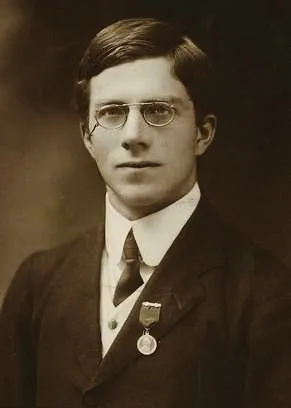
Sir Ronald Aylmer Fisher stands as one of the most influential scientific figures of the twentieth century, leaving an indelible mark on multiple disciplines through his brilliant integration of mathematics, biology, and statistics. Born in London in 1890, his early struggles with poor eyesight inadvertently fostered a unique capability to visualize complex problems in geometrical terms rather than relying solely on traditional written mathematical proofs. Despite being rejected by the British Army for World War I due to his vision, Fisher pursued academic excellence at Cambridge, earning a First in Mathematics in 1912 and laying the groundwork for a prolific career.
During his fourteen-year tenure at the Rothamsted Experimental Station starting in 1919, Fisher revolutionized data analysis by developing the analysis of variance, commonly known as ANOVA. Tasked with examining massive sets of agricultural data accumulated over decades, he established his reputation as a premier biostatistician while simultaneously creating foundational concepts in multivariate statistics and experimental design. His landmark 1925 publication, Statistical Methods for Research Workers, popularized the use of p-values and set the standard for statistical significance that researchers rely on to this day.
Related Stories

Get the Latest Sports News from Seymour's Bird
Receive the latest updates on football, basketball,and technology news directly in your inbox. It's free!
SubscribeBeyond his monumental work in statistics, Fisher was a titan in evolutionary biology and genetics, where he successfully combined the theories of Gregor Mendel and Charles Darwin. By demonstrating how continuous variation among phenotypic traits could arise from discrete Mendelian genes, he helped pioneer population genetics and quantitative genetics alongside contemporaries J. B. S. Haldane and Sewall Wright. His seminal 1930 book, The Genetical Theory of Natural Selection, served as a cornerstone for the modern evolutionary synthesis and revitalized interest in sexual selection mechanisms.
Fisher's career also encompassed prestigious academic appointments, including succeeding Karl Pearson as the Galton Professor of Eugenics at University College London in 1933 and editing the Annals of Eugenics. While his scientific methodologies and concepts such as Fisher information continue to drive modern research, his historical associations with eugenics have led several institutions to reassess and remove commemorations of their ties to him. Nevertheless, his overarching legacy as a foundational architect of modern data science and evolutionary theory remains secure.