
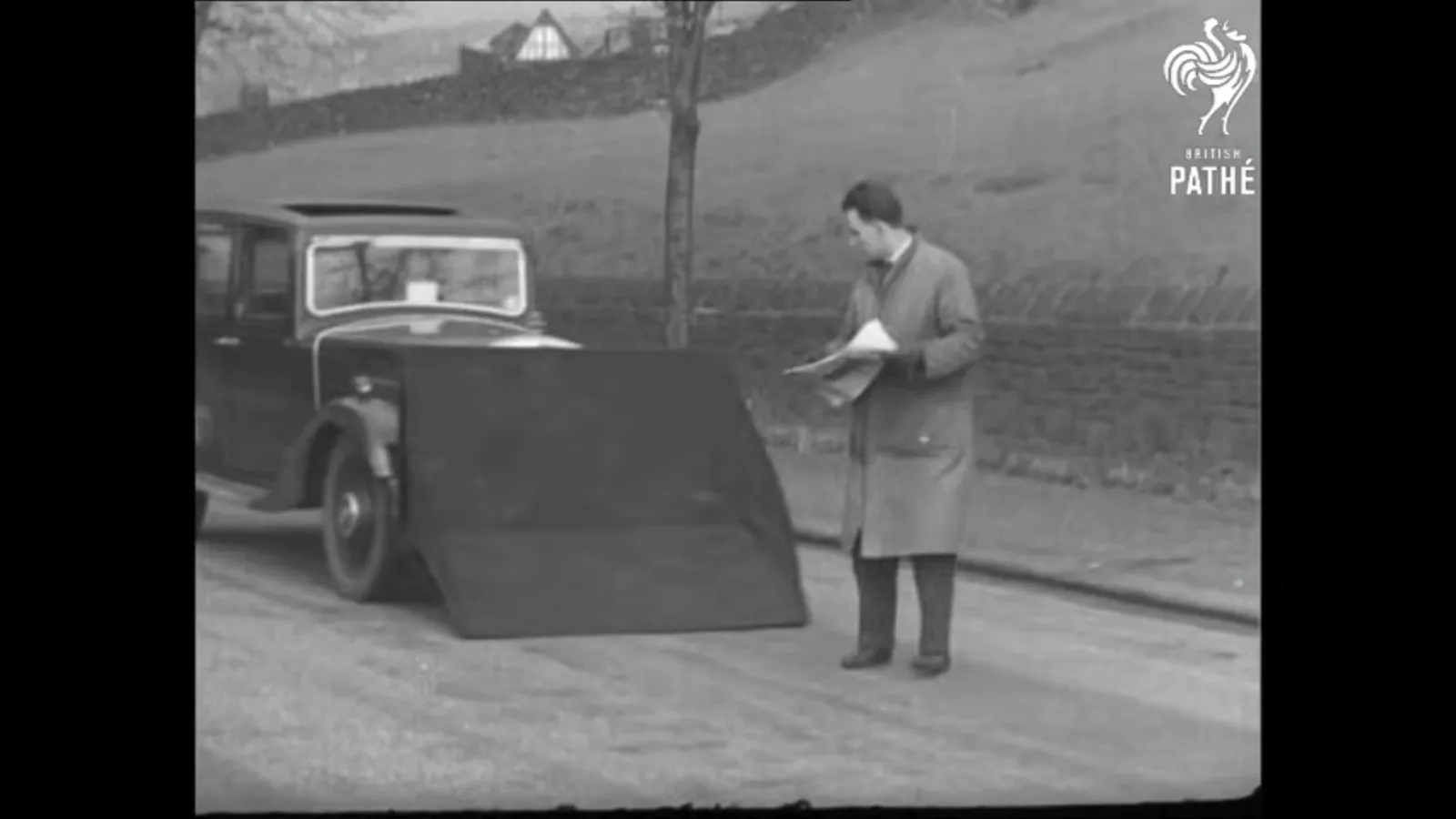
Pedestrian catchers emerged in the 1930s as an amusing yet desperate answer to surging pedestrian car deaths on lawless and dangerous early roadways. When the automotive boom turned streets into chaotic free-for-alls, innovators attempted unconventional mechanical solutions to protect walkers from two-ton vehicles.
British Pathé footage from the era showcased a patented device featuring two panels and a folded cloth extending across the front of the car. Activated by a switch on the steering column, this rudimentary contraption aimed to scoop up pedestrians rather than subjecting them to the blunt force of a metal grille.
Related Stories

Get the Latest Sports News from Seymour's Bird
Receive the latest updates on football, basketball,and technology news directly in your inbox. It's free!
SubscribeEarly vehicles of the period handled like refrigerators on wheels, featuring unresponsive steering and virtually no standardized driver training or road rules. With vehicles multiplying rapidly across the United States, annual pedestrian deaths soared as high as 15000 during the 1930s.
Manufacturers ignored external safety and regulators offered little protection, leaving inventors to file patents for whimsical contraptions. Newspapers of the decade reported on elaborate designs featuring folding nets, upholstered seats, and automatic braking triggers designed to make getting hit by a car comfortable.
The Reality Behind Bizarre Vintage Car Safety Inventions
Pedestrian catchers ultimately failed to catch on due to glaring practical flaws that rendered them largely ineffective in real-world driving conditions. Deployment relied entirely on the driver's quick reaction time at low speeds, making the complex safety machinery completely superfluous.
When activated, these front-mounted contraptions obstructed the driver's forward vision and further compromised the already poor maneuverability of early automobiles. Critics and contemporary reporters quickly turned the impractical inventions into objects of satire rather than serious safety equipment.
Satirical newspaper articles from the era imagined elaborate scenarios where being struck by a speeding vehicle resulted in being safely deposited into a cushioned armchair. Such humorous accounts reflected public skepticism toward devices that attempted to fix reckless driving with elaborate mechanical gimmicks.
Modern vehicle safety standards eventually evolved through formal regulation rather than quirky driver-activated scoops and nets. Today, the historical legacy of pedestrian catchers serves as a fascinating reminder of early automotive ingenuity during a time when road safety was an afterthought.