
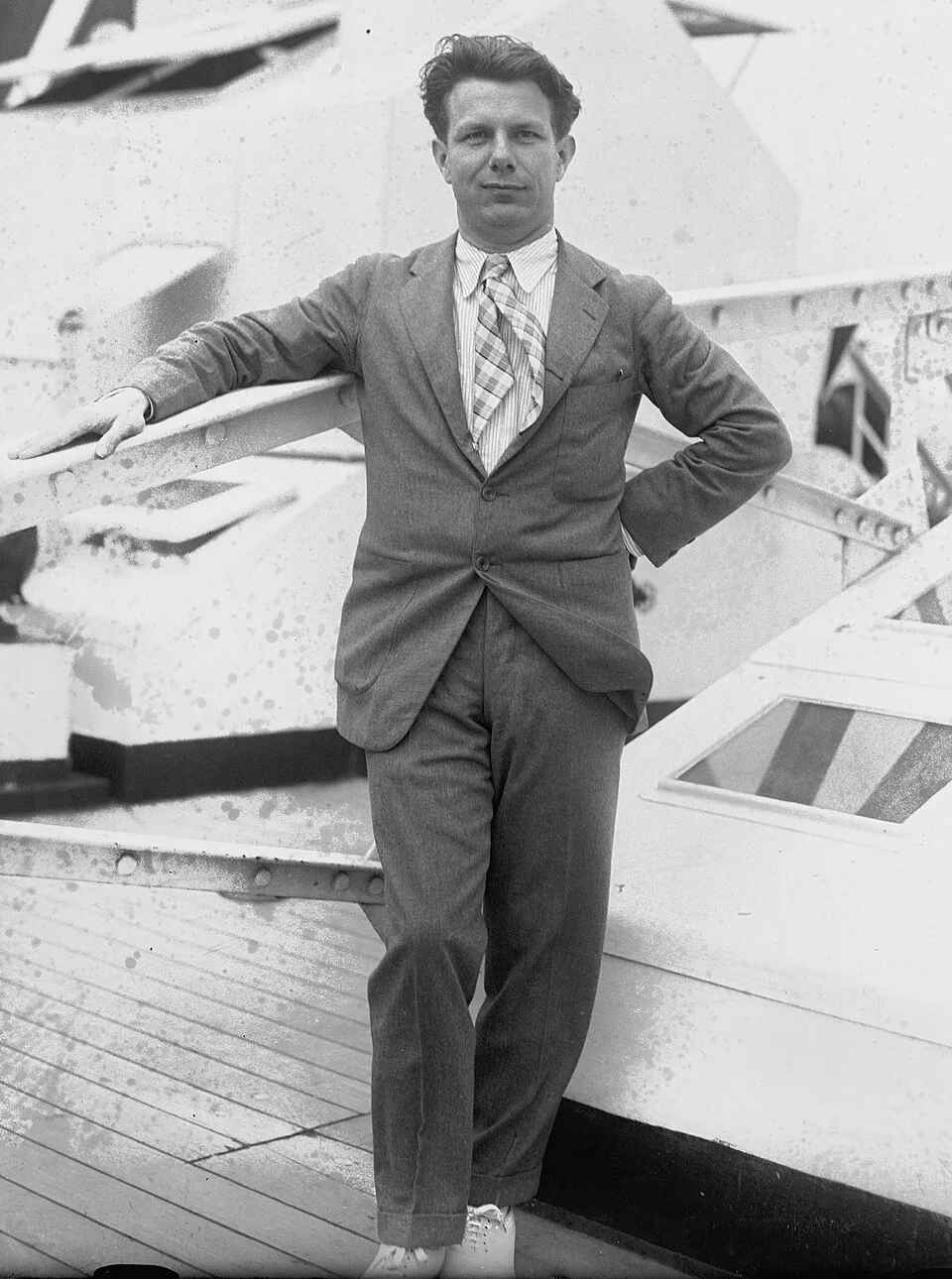
Norman Bel Geddes established himself as one of the twentieth century's most influential creative forces through groundbreaking contributions to both theatrical production and industrial design. Born in Adrian, Michigan, in 1893, he began his career with imaginative set designs for the Broadway stage and New York's Metropolitan Opera before transitioning into the burgeoning field of industrial design during the 1930s. Often celebrated as a master of style and a brilliant craftsman, Bel Geddes applied an energized perspective to utilitarian objects ranging from ocean liners and automobiles to everyday consumer products like cocktail shakers.
His visionary approach popularized the concept of streamlining across American culture, transforming how society perceived commercial manufacturing and utilitarian efficiency. By drawing inspiration from organic biological forms found in nature, such as birds and fish, Bel Geddes championed sleek contours that defined the aesthetic of the 1930s. His 1932 publication "Horizons" and his conceptual designs for futuristic modes of transport, including massive multi-deck amphibians and teardrop-shaped automobiles, inspired engineers and designers to rethink functionality and form in tandem.
Related Stories

Get the Latest Sports News from Seymour's Bird
Receive the latest updates on football, basketball,and technology news directly in your inbox. It's free!
SubscribeAmong his most monumental achievements was the creation of the celebrated Futurama Exhibition for the 1939 New York World's Fair, sponsored by General Motors. This ambitious project offered millions of visitors a glimpse into a utopian future characterized by advanced urban planning and efficient highway networks. Beyond consumer goods and world's fair attractions, Bel Geddes also contributed his design expertise to technological milestones, crafting the distinctive case for the Mark I computer utilized at Harvard University just in time for its historic dedication.
Though he passed away in New York in 1958, his enduring legacy persists through extensive archives housed at the University of Texas at Austin and recognition within the American Theater Hall of Fame. His profound impact on American industrial aesthetics, paired with his ability to imagine tomorrow's world through radical design concepts, cements his status as a foundational pioneer of modern commercial creativity.