
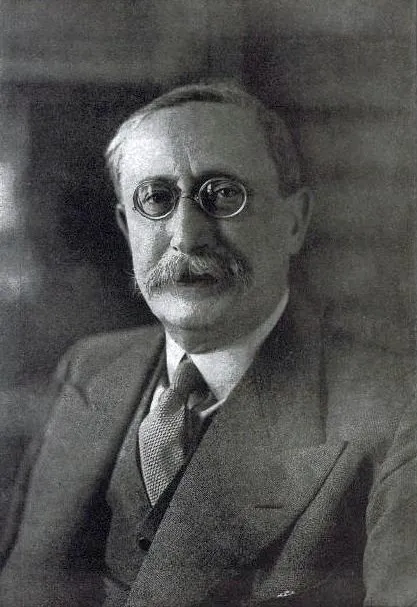
Léon Blum emerged from the refined salons of late 19th-century Paris as a figure of striking contradictions, balancing the aesthetic pursuits of a dandy with the rigorous intellectualism of a legal scholar. Born in 1872 to an assimilated Jewish family, Blum initially cultivated a reputation as a provocative literary critic and connoisseur of modern literature before world events thrust him onto the political stage. Dressed impeccably in expensive suits, top hats, and a monocle, the young Blum navigated the elite circles of the capital while quietly harboring deep convictions rooted in the universalism of the French Enlightenment. Though frequently targeted by contemporaries for his refined demeanor and lifestyle, Blum possessed an inner resolve that he famously proved through participation in formal duels, firmly rejecting attempts by political rivals to diminish his stature or character.
The trajectory of Blum's life altered dramatically during the turbulent currents of the Dreyfus Affair in the late 1890s, an event that awakened his profound commitment to civic justice and republican values. Initially hesitant, Blum was persuaded of the absolute innocence of Captain Alfred Dreyfus and subsequently threw his considerable intellect into the defense campaign alongside prominent legal minds and journalists of the era. This fierce immersion into national politics exposed him directly to the virulent anti-Semitism festering within certain echelons of French society, shaping his lifelong belief that socialism offered the ultimate antidote to bigotry. Allying himself closely with socialist leader Jean Jaurès, Blum rapidly ascended within the French Section of the Workers" International to become the intellectual architect of the party, merging his passion for secular republicanism with systematic socialist reform.
Related Stories

Get the Latest Sports News from Seymour's Bird
Receive the latest updates on football, basketball,and technology news directly in your inbox. It's free!
SubscribeAs the clouds of the First World War gathered over Europe in 1914, Blum faced the ultimate test of his political philosophy following the assassination of his mentor Jaurès. Demonstrating pragmatic leadership, Blum cast aside strict pacifism in favor of national defense, arguing that democratic France held a moral imperative to resist aggressive militarism from the German Empire. Throughout the wartime years, he worked tirelessly within the Sacred Union coalition government while maintaining a steadfast vision for political modernization inspired by the British Westminster system. Blum consistently advocated for a more centralized and effective executive premiership under the Third Republic, setting the conceptual groundwork for the substantial economic and social reforms he would later enact as prime minister during the tumultuous era of the Popular Front.