
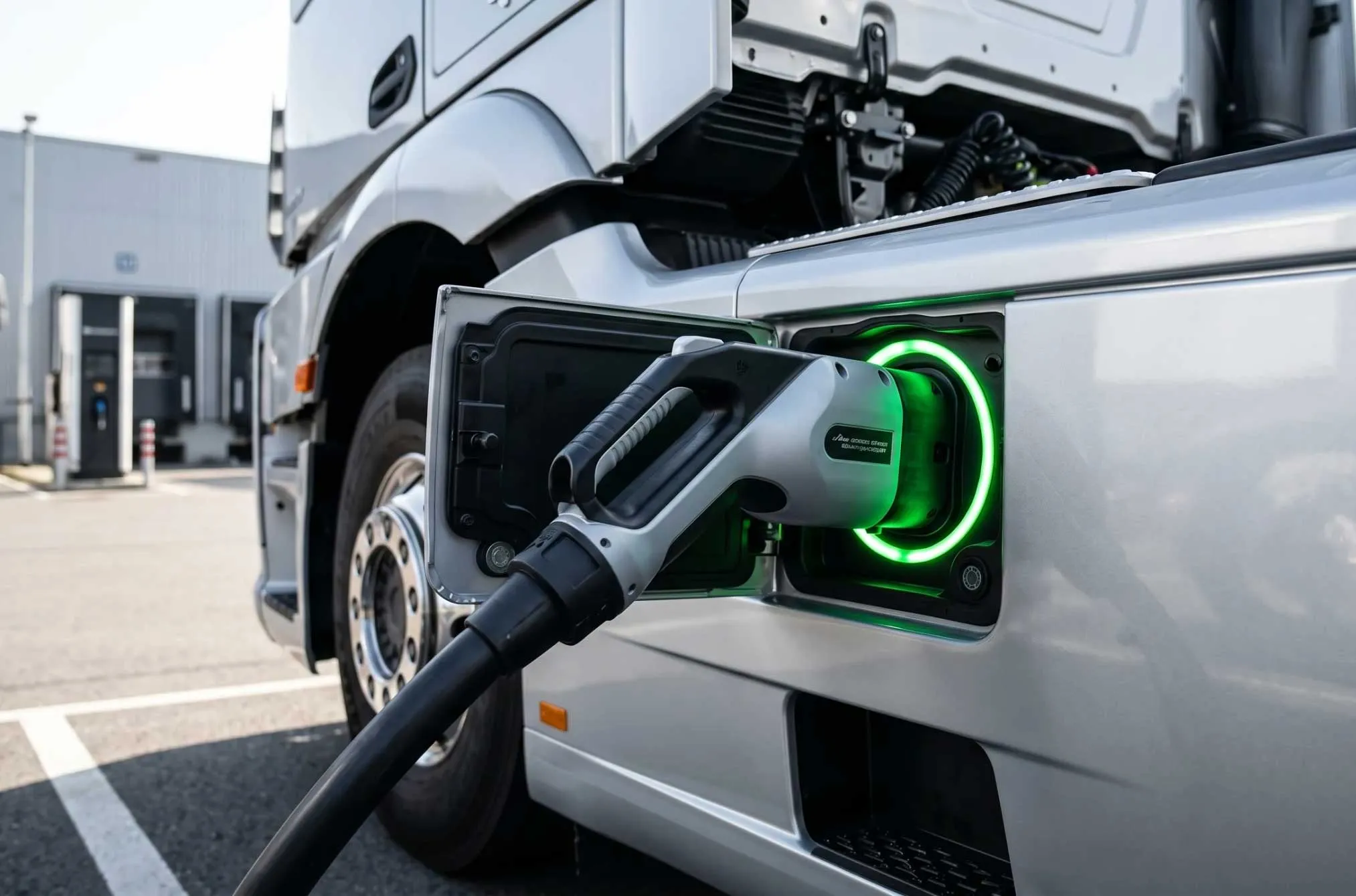
Global electric truck sales surged by 75 percent during the first half of 2026, hitting a landmark 158000 medium- and heavy-duty zero-emission vehicles sold worldwide. According to the latest data from BloombergNEF, this rapid acceleration signals a major turning point for the commercial transport sector, which is moving past early pilot phases into mainstream commercial deployment.
"The market for zero-emission commercial vehicles is entering an aggressive scaling phase driven by better economics, improving battery tech, and aggressive policy support," market analysts note, emphasizing that battery-electric models account for practically all of this volume while hydrogen fuel cells remain marginal.
Related Stories

Get the Latest Sports News from Seymour's Bird
Receive the latest updates on football, basketball,and technology news directly in your inbox. It's free!
SubscribeDespite the global momentum, the expansion remains heavily lopsided geographically. China continues to anchor the global transition by single-handedly swallowing up nearly 145000 of those units, backed by aggressive scrappage subsidies and advanced battery-swapping ecosystems built out by industrial giants.
Meanwhile, Western markets face contrasting headwinds. While parts of Europe show steady progress led by Scandinavian frontrunners, the United States has experienced a sharp contraction due to rolling back federal credits and regulatory adjustments, leaving international automakers scrambling to recalibrate commercial strategies.
Infrastructure Bottlenecks Threaten Western Adoption Rates

European and American markets face severe infrastructure hurdles that threaten to stall fleet electrification despite strong corporate interest. Industry operators point out that heavy-duty charging corridors remain sparse, with only a fraction of highway rest stops equipped with high-power chargers capable of handling large commercial fleets.
"Logistics companies want to transition away from diesel, but the lack of reliable megawatt-scale charging on major freight corridors makes long-haul operations a massive gamble," logistics trade association representatives have repeatedly warned regarding regional rollout delays.
Regulatory frameworks like Europe's Alternative Fuels Infrastructure Regulation are attempting to force governments to install high-capacity chargers every 60 to 100 kilometers by 2030. However, countries like France, Germany, and Spain are currently lagging behind their mandated targets.
Unless governments accelerate grid upgrades and financial incentives to match Beijing's aggressive blueprint, Western logistics sectors risk falling permanently behind in the global clean transport race, dampening emission reduction targets for heavy transport.