
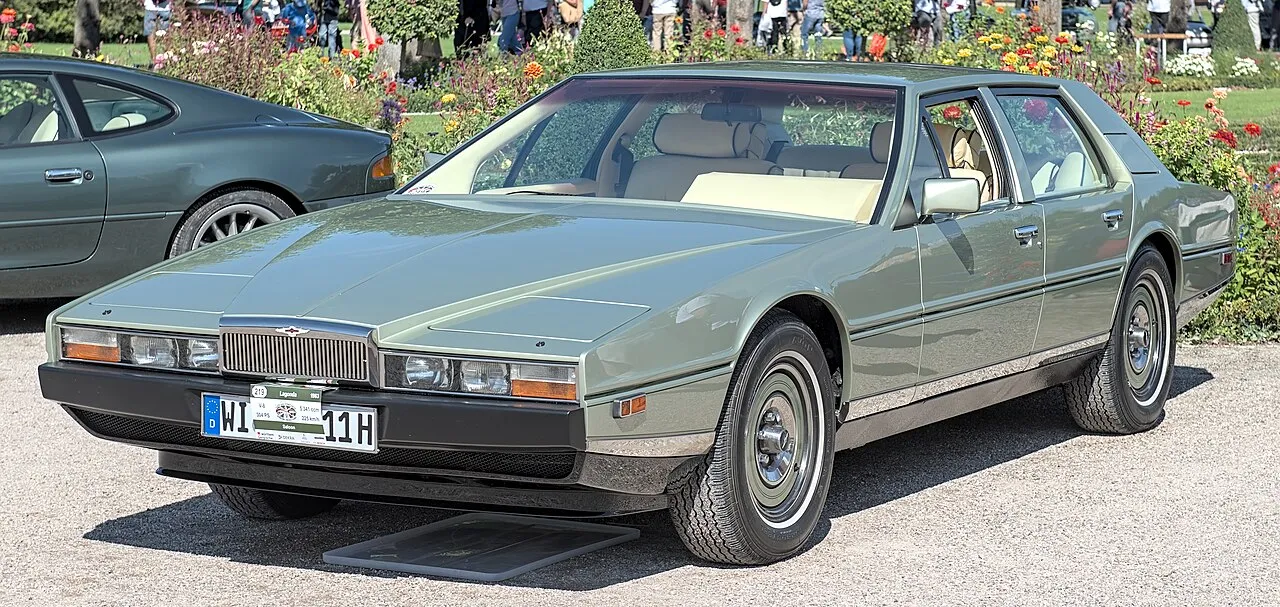
Aston Martin Lagonda vehicles defined an era of bold automotive experimentation when the British manufacturer introduced the luxury four-door saloon in 1974. Designed to pull the historic brand out of financial turmoil, the vehicle shifted focus away from traditional sports cars into an uncharted realm of avant-garde luxury.
Created initially under financial pressure, the model relied on a lengthened Aston Martin V8 platform before undergoing a radical transformation. William Towns penned the iconic wedge-shaped Series 2 in 1976, capturing the quintessential folded paper aesthetic of the 1970s and turning heads worldwide.
Related Stories

Get the Latest Sports News from Seymour's Bird
Receive the latest updates on football, basketball,and technology news directly in your inbox. It's free!
SubscribeDespite its polarizing looks and mechanical quirks, the hand-built saloon commanded a staggering price tag, rivaling elite names like Rolls-Royce and Bentley. Only 645 units rolled out of the Newport Pagnell factory over its tumultuous 12-year production run, cementing its status as an ultra-rare collector piece.
Modern automotive culture continues to look back at the Lagonda with a mix of awe and amusement, particularly due to its notoriously complex digital dashboards. Whether hailed as a stroke of design genius or criticized as a technological disaster, it remains an unforgettable chapter in British motoring history.
Evolution of a Radical Machine
Series iterations of the luxury saloon pushed technological boundaries long before modern screens became standard in vehicles. The inclusion of early digital instrument panels and touch-sensitive controls made it a pioneer, though these advanced electronics proved exceptionally fragile in real-world driving conditions.
Subsequent updates, including the Series 3 and the heavily restyled Series 4 launched in 1987, attempted to refine the vehicle's edgy personality. Designer William Towns smoothed out the sharp corners and integrated new lighting configurations, keeping production trickling along until the final car was completed in 1990.
Specialized coachbuilders also left their mark on the chassis, crafting rare iterations such as Tickford limousines, two-door variants, and even a unique shooting-brake estate. These coachbuilt conversions have become holy grails for dedicated enthusiasts seeking the ultimate expression of exclusivity.
Today, surviving examples of the Aston Martin Lagonda command immense respect on the concours circuit and among boutique collectors. Its legacy as a fearless design exercise ensures that automotive historians will debate its triumphs and tribulations for generations to come.