
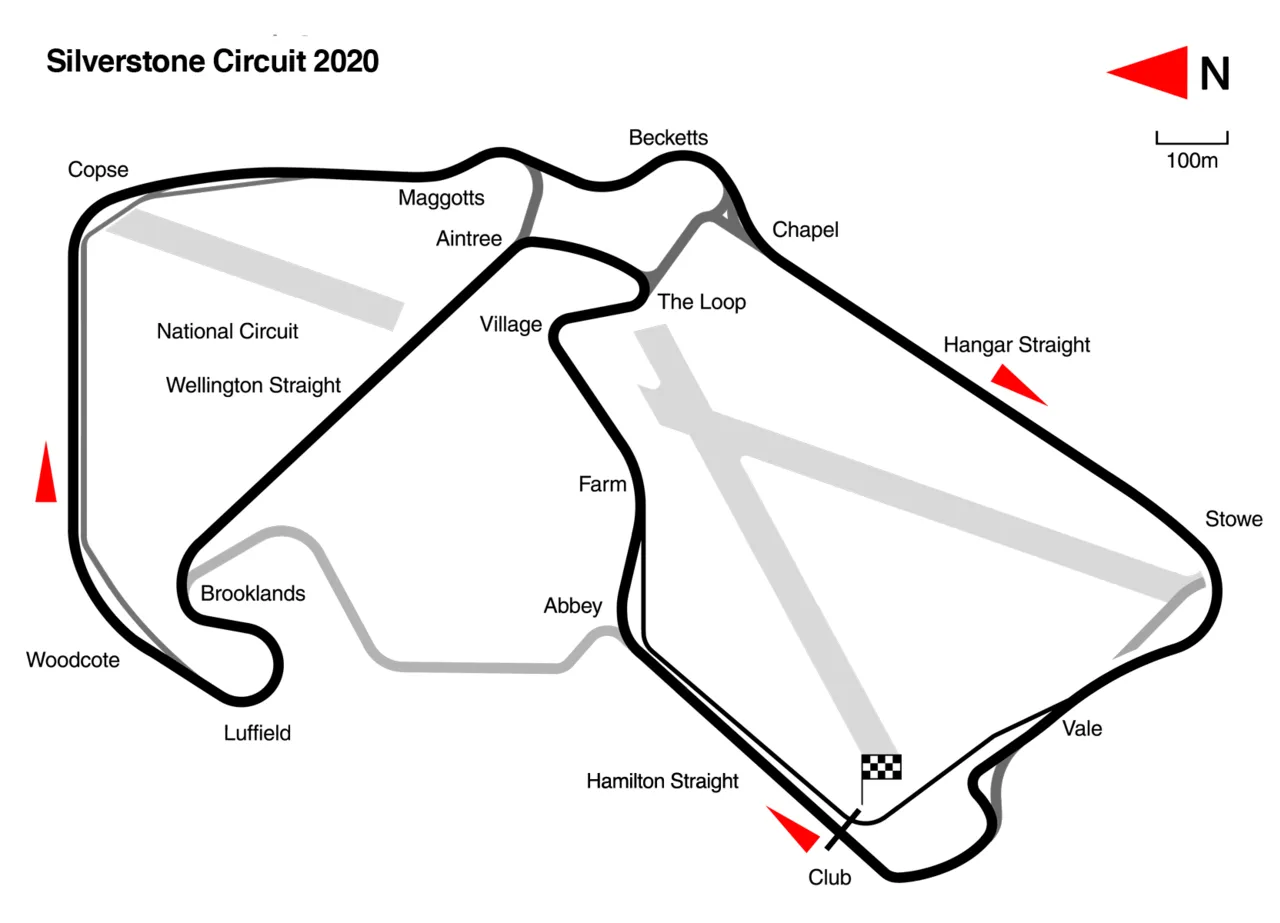
Silverstone Circuit stands as the undisputed cathedral of British motor racing, carrying a legacy that stretches far beyond its asphalt and modern grandstands. Located in Northamptonshire, this world-renowned track welcomes hundreds of thousands of fans annually for the premier events on the racing calendar, including the British Grand Prix and MotoGP.
Long before high-speed Formula One machines tore around its corners, the hallowed grounds served a very different national purpose. Between 1943 and 1946, the site operated as RAF Silverstone, a crucial bomber station housing the No. 17 Operational Training Unit. The iconic triangular runway layout of the Second World War airfield directly dictated the foundational shape of the modern racing layout we know today.
Related Stories

Get the Latest Sports News from Seymour's Bird
Receive the latest updates on football, basketball,and technology news directly in your inbox. It's free!
SubscribeThe transition from military airfield to racing mecca happened almost by accident in the late 1940s. An ad-hoc group of driving enthusiasts, seeking a mainland location to satisfy their competitive urges in an era of post-war austerity, discovered the deserted runways. Following an impromptu and somewhat chaotic gathering in 1947, the Royal Automobile Club took over the lease, planting the seeds for international motorsport history.
Over the decades, the circuit has undergone numerous structural redesigns to balance breathtaking speeds with modern safety requirements. From the historic 1948 inaugural event attended by royalty to the technical sweeps of Maggotts and Becketts, Silverstone continues to challenge the world's best drivers while honoring its storied past.
The Evolution Of A Legendary Track
The architectural evolution of Silverstone reflects the relentless pursuit of safety and competitive excellence in motorsport. Early configurations utilized the wide expanse of the runways and perimeter roads, defined largely by simple hay bales and oil drums during the dawn of the World Championship in 1950.
Significant alterations over the years transformed the venue from an ultra-fast, flowing airfield circuit into a highly technical test of driver skill and car setup. The 1991 redesign notably tamed the relentless straights, introducing complex sequences that reward precision and vehicle balance over sheer engine power alone.
Safety modifications following pivotal moments in motorsport history further shaped the circuit's current layout, ensuring adequate run-off areas without sacrificing the character that drivers love. Corners like Stowe and Club now present critical tactical opportunities where races can be won or lost in the final fractions of a second.
Today, the circuit remains deeply intertwined with the heartbeat of modern Formula One engineering, surrounded by team bases and elite facilities. As it continually adapts to the future of racing, Silverstone preserves its unique identity as the ultimate test of man and machine.