
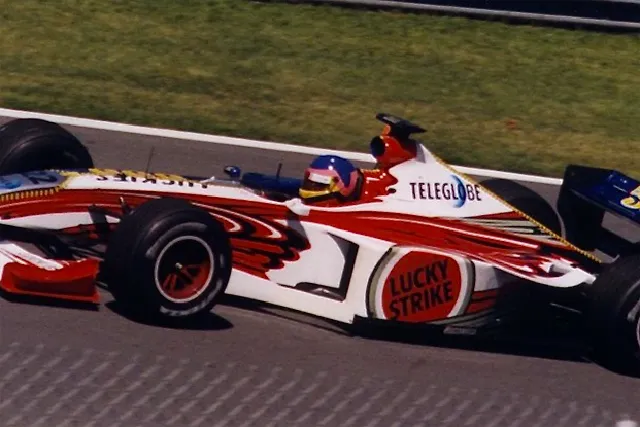
BAR 01 entered the 1999 Formula One season as the inaugural machine for British American Racing following their purchase of Tyrrell. Led by team principal Craig Pollock, the squad secured the services of 1997 World Champion Jacques Villeneuve alongside Ricardo Zonta, creating high expectations right from the start.
Despite the high-profile driver lineup and technical collaboration with Reynard Motorsports, the debut campaign turned into a major disappointment. Chronic reliability issues plagued the team throughout the year, famously resulting in Villeneuve failing to finish any of the first eleven races of the season.
Related Stories

Get the Latest Sports News from Seymour's Bird
Receive the latest updates on football, basketball,and technology news directly in your inbox. It's free!
SubscribeThe car also faced immediate regulatory hurdles before a wheel was even turned, as the FIA rejected the initial plan to run two completely different liveries for its sponsored cigarette brands. This led to an iconic split design featuring Lucky Strike on one side and 555 on the other, separated by a distinct zipper motif down the nosecone.
Ultimately, the season ended without a single championship point, leaving the team at the bottom of the Constructors" Championship behind much smaller outfits. Even decades later, the machine remains remembered as a fascinating piece of motorsport history for its unique aesthetic and catastrophic lack of reliability.
Technical Specifications and Legacy
Underneath its striking exterior, the chassis was built around a moulded carbon fibre composite structure equipped with double-wishbone suspension and a Supertec V10 engine. Power output reached approximately 780 horsepower at 15,800 revolutions per minute, channeled through a six-speed longitudinal sequential semi-automatic transmission.
Engineering design was spearheaded by Adrian Reynard and Malcolm Oastler, who aimed high with ambitious targets for performance and grid positioning. However, the heavy burden of mechanical failures overshadowed whatever pace the car occasionally showed during mid-race battles.
When tobacco advertising restrictions came into effect at specific Grands Prix, alternative branding was deployed, replacing the prominent cigarette logos with clean text and secondary symbols. These subtle adjustments highlighted the complex corporate sponsorship landscape of late 1990s Grand Prix racing.
Retrospective analyses by motorsport journalists often rank the machine among the most competitive yet unfortunate designs to ever miss out on championship points. As of 2026, it stands uniquely as the final Brackley-built Formula One contender to finish a full season completely scoreless.